

Why Gut Bacteria Diversity Matters for Your Health
Gut bacteria diversity refers to the range and abundance of microbial species living in your digestive tract, and it is one of the strongest predictors of long-term health. The adult gut contains over 1,000 species and more than 7,000 bacterial strains, encoding 3.3 million microbial genes. That is 150 times more genetic material than the human genome carries. Understanding why gut bacteria diversity matters gives you a direct line to better digestion, stronger immunity, and lower inflammation across your entire body. Your microbiome is also uniquely yours. Even though humans share 99.9% of their DNA with each other, individual microbiomes differ by 80–90%. That individuality shapes how your body responds to food, stress, and disease.
Why gut bacteria diversity matters for digestion and nutrient absorption
A diverse gut microbiome is the engine behind efficient digestion. Different microbial species specialize in breaking down different types of food, particularly complex carbohydrates and plant fibers that your own digestive enzymes cannot process. Without that variety, large portions of your diet pass through undigested, and your body misses out on key nutrients.

The most important byproducts of this microbial work are short-chain fatty acids, or SCFAs. Butyrate is the most studied SCFA. It feeds the cells lining your colon, strengthens the gut barrier, and signals your immune system to stay calm. Low microbial diversity reduces SCFA production directly, which weakens the gut lining and raises disease risk. That connection explains why conditions like ulcerative colitis are so closely tied to microbiome imbalance.
A concept called functional redundancy makes diversity even more valuable than a simple species count suggests. Functional redundancy means multiple different bacterial species can perform the same metabolic job. So when one species declines due to illness, antibiotics, or a bad week of eating, another species steps in to keep digestion running. A low-diversity gut lacks that backup system. You can read more about how this plays out day to day in this guide to gut microbiome and digestion.
- Fiber fermentation: Bacteria like Roseburia and Faecalibacterium ferment dietary fiber into butyrate and other SCFAs that protect the gut lining.
- Nutrient extraction: A diverse microbiome unlocks vitamins like B12, K2, and folate from food that your body cannot produce on its own.
- Gut barrier integrity: SCFA production from diverse bacteria keeps tight junctions between gut cells sealed, preventing leaky gut.
- Metabolic flexibility: More microbial species means more metabolic pathways, so your gut adapts better to dietary changes.
Pro Tip: Eating 30 or more different plant foods per week is one of the most evidence-backed ways to feed a wider range of gut bacteria and increase SCFA production.
How does gut bacteria diversity affect immunity and inflammation?
The gut microbiome is the body’s largest immune organ. Roughly 70% of your immune cells live in or near the gut lining, and they take constant cues from the microbial community around them. A diverse microbiome trains those immune cells to distinguish between harmless substances and genuine threats. A low-diversity microbiome sends confused signals, which pushes the immune system toward chronic, low-grade inflammation.
The gut microbiome acts as an integrative regulator of host homeostasis, influencing immune tolerance and metabolic health through bidirectional signaling with the brain, liver, and endocrine system. That means what happens in your gut does not stay in your gut. Inflammatory signals travel systemically, contributing to conditions far removed from the digestive tract.
Here is how low diversity connects to specific inflammatory conditions:
- Inflammatory bowel disease (IBD): Reduced microbial diversity is a consistent finding in IBD patients, with keystone species like Faecalibacterium prausnitzii often depleted.
- Ulcerative colitis: Reduced SCFA production from low-diversity microbiomes directly worsens colonic inflammation in ulcerative colitis.
- Eczema and atopic disease: Infants with lower gut diversity in the first months of life show higher rates of eczema and allergic sensitization.
- Metabolic inflammation: Gut microbiome diversity decreases with age, with beneficial taxa like Bifidobacterium declining and pro-inflammatory species increasing. This shift raises susceptibility to metabolic diseases.
“Balanced gut microbial ecosystems matter more than simply high species counts, since excessive diversity can sometimes correlate with unhealthy dysbiosis.” — Mayo Clinic research context
The goal is not the highest possible diversity. The goal is a balanced, functional community where beneficial species dominate and inflammatory species stay in check. You can explore the direct link between microbial balance and immune function in this gut health and immunity guide.
Pro Tip: Fermented foods like yogurt, kefir, kimchi, and sauerkraut have been shown to reduce systemic inflammatory markers in adults after consistent consumption over several weeks.
What factors influence gut bacteria diversity, and how can you improve it?
Diet is the single most powerful lever you have over your microbiome. Dietary habits, especially fiber consumption, are the main long-term drivers of gut microbiome diversity. No supplement replaces the sustained effect of a fiber-rich, varied diet.
A large-scale survey of 40,000 microbiomes identified keystone bacteria like Roseburia and Faecalibacterium as strongly linked to health outcomes. Adding fermented foods leads to increased microbial diversity and reduced systemic inflammation after about 2.5 months of consistent intake. That timeline matters. Microbiome shifts are real but not instant.
Mathematical models of microbial ecology show that feeding parameters maximize diversity over time and correlate directly with the microbial content of food. In plain terms, the microbes you eat through fermented and fiber-rich foods literally immigrate into your gut and help sustain its diversity. This concept, sometimes called microbial immigration through diet, explains why food variety beats any single supplement.
Factors that reduce gut bacteria diversity:
- Antibiotic courses, even short ones, can wipe out entire bacterial families and take months to recover.
- Aging naturally reduces beneficial taxa like Bifidobacterium while allowing pro-inflammatory species to expand.
- Ultra-processed diets low in fiber starve beneficial bacteria and reduce species richness within days.
- Chronic stress elevates cortisol, which alters gut motility and disrupts microbial balance.
Practical ways to support microbial diversity:
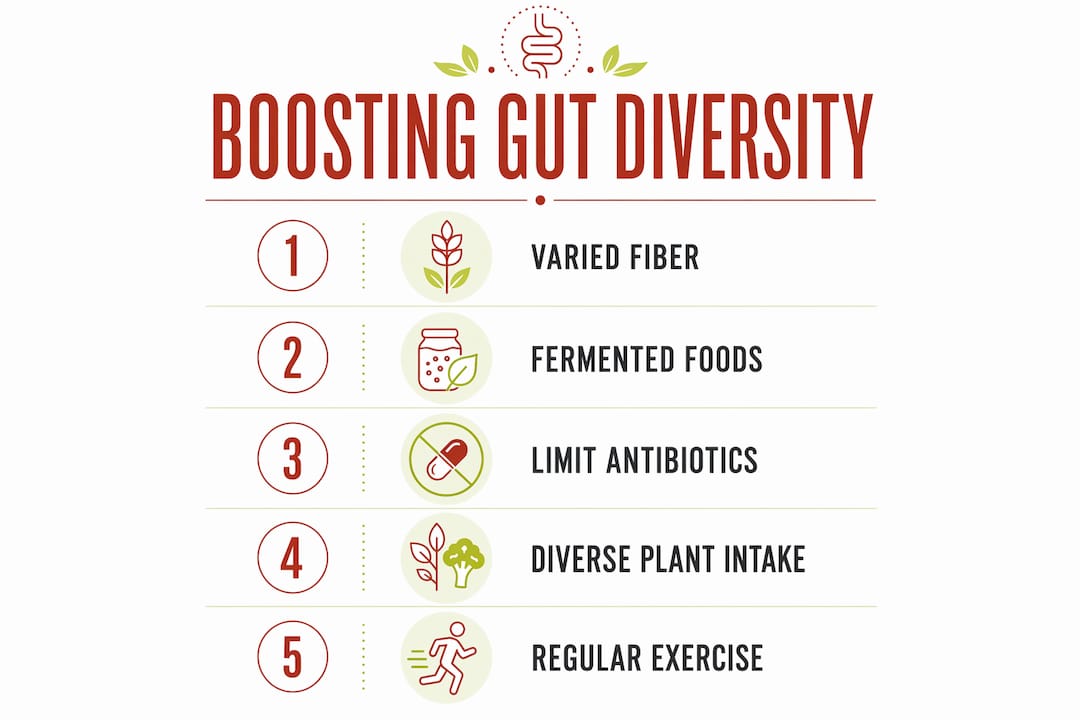
- Eat a wide variety of plant foods, targeting different fiber types from vegetables, legumes, whole grains, nuts, and seeds.
- Include fermented foods daily: kefir, plain yogurt, kimchi, miso, and tempeh each introduce different microbial strains.
- Use antibiotics only when medically necessary, and discuss probiotic support with your doctor during and after a course.
- Prioritize sleep and manage stress, since both directly affect gut motility and microbial composition.
| Approach | Effect on diversity | Timeline |
|---|---|---|
| Varied plant fiber intake | Increases species richness and SCFA production | Weeks to months |
| Fermented food consumption | Adds live strains, reduces inflammation markers | 6–10 weeks |
| Probiotic supplementation alone | No statistically significant change in healthy adults | Variable |
| Antibiotic use | Sharply reduces diversity | Days |
For a deeper look at how prebiotics compare to probiotics for microbiome support, this article on improving gut health with prebiotics is worth your time.
Common misconceptions about gut microbiome diversity
The biggest myth in gut health is that more diversity is always better. Excessively high microbial diversity can actually signal dysbiosis or disease in certain clinical contexts. A gut overrun with an unusual mix of species, including opportunistic pathogens, may score high on a diversity index while functioning poorly. The number alone tells you nothing about whether the right species are present.
Microbiome diversity is a dynamic trait that shifts with lifestyle changes. This is good news. It means your microbiome responds to what you do consistently, not just to a single supplement or a two-week cleanse. Sustained dietary fiber intake produces lasting changes. Intermittent probiotic use does not.
Several other misconceptions are worth clearing up:
- “Probiotics rebuild diversity.” Probiotic supplements introduce a small number of specific strains. They do not replicate the hundreds of species that a fiber-rich diet supports over time.
- “A diverse microbiome means you are healthy.” Diversity is one marker among many. Functional balance, the presence of keystone species, and low inflammatory markers together paint a more complete picture.
- “Your microbiome is fixed.” It changes constantly in response to diet, sleep, stress, medications, and environment. You have more influence over it than most people realize.
- “Everyone needs the same gut bacteria.” Individual microbiomes differ dramatically. What works for one person’s gut health may not work for another’s, which is why personalized dietary approaches matter.
The science here is still evolving. Researchers are moving away from simple diversity scores toward functional analyses that measure what the microbiome actually does, not just which species are present.
Key Takeaways
A diverse, functionally balanced gut microbiome is the foundation of digestion, immune regulation, and inflammation control, and diet is the most reliable way to build and maintain it.
| Point | Details |
|---|---|
| Diversity signals resilience | A gut with 1,000+ species has backup systems that keep digestion running when individual species fluctuate. |
| SCFAs connect diversity to immunity | Butyrate and other SCFAs from fiber fermentation strengthen the gut lining and reduce systemic inflammation. |
| Diet outperforms supplements | Probiotic supplements alone do not significantly increase diversity; varied fiber and fermented foods do. |
| More is not always better | Excessively high diversity can indicate dysbiosis; functional balance matters more than species count. |
| Diversity declines with age | Beneficial taxa like Bifidobacterium decrease over time, making consistent dietary support increasingly important. |
What I have learned from watching the gut health conversation evolve
The gut microbiome conversation has shifted dramatically in the past decade, and not always in the right direction. The supplement industry latched onto “gut health” early, and the result was a flood of probiotic products promising to fix everything from brain fog to belly fat. I have watched health-conscious people spend real money on products that the research simply does not support for diversity enhancement.
What the science actually shows is less glamorous but more empowering. Your fork is your most powerful gut health tool. Eating 30 different plant foods a week, including legumes, whole grains, nuts, seeds, and a wide range of vegetables, does more for your microbial ecosystem than any capsule. Fermented foods add live strains that interact with your existing community. Fiber feeds the species already there.
The concept of the microbiome as a “second genome” is one I find genuinely exciting. You cannot change your DNA, but you can meaningfully shift the 3.3 million microbial genes operating inside you through consistent daily choices. That is a real opportunity, and it does not require expensive interventions. What it does require is patience. Microbiome shifts take weeks, not days. The people I see make real progress are the ones who treat gut diversity as a long-term practice, not a quick fix.
My honest advice: stop chasing the perfect probiotic and start building a plate that looks different every day. Your gut bacteria will do the rest.
— Larry
Tryrevivify and the science of cellular gut support
Gut bacteria diversity sets the foundation, but your cells need support too. Tryrevivify’s Revivify® 30-day supply combines superoxide dismutase (SOD) with prebiotic fiber in a patented formula designed to fight free radicals and reduce oxidation at the cellular level.

SOD is the body’s primary antioxidant enzyme, neutralizing the free radicals that drive cellular damage and inflammation. Pairing it with prebiotic fiber means Tryrevivify supports both the cellular environment and the microbial community that depends on it. For health-conscious people already focused on fiber and gut inflammation, Revivify® offers a complementary layer of protection that works from the inside out.
FAQ
What is gut bacteria diversity?
Gut bacteria diversity refers to the number and variety of microbial species living in the digestive tract. The adult gut contains over 1,000 species and more than 7,000 bacterial strains, making it one of the most complex ecosystems in the human body.
Why does a diverse gut microbiome reduce inflammation?
A diverse microbiome produces more short-chain fatty acids like butyrate, which strengthen the gut lining and signal the immune system to reduce inflammatory activity. Low diversity is directly linked to conditions like ulcerative colitis and IBD.
Do probiotic supplements increase gut bacteria diversity?
Probiotic supplementation in healthy adults does not statistically significantly change gut microbiota diversity. Consistent intake of varied dietary fiber and fermented foods is the primary driver of lasting diversity improvements.
What foods increase gut bacteria diversity the most?
Varied plant fibers from vegetables, legumes, whole grains, nuts, and seeds feed the widest range of bacterial species. Fermented foods like kefir, kimchi, and plain yogurt add live strains and have been shown to reduce systemic inflammation after consistent consumption.
Does gut bacteria diversity decline with age?
Microbial diversity decreases with age, with beneficial taxa like Bifidobacterium diminishing and pro-inflammatory species increasing. This shift raises susceptibility to metabolic diseases, making sustained dietary support more important as you get older.