

How Gut Bacteria Affects Blood Sugar: 2026 Guide
Gut bacteria directly regulate blood sugar by producing metabolites that control insulin sensitivity, glucose uptake, and systemic inflammation. The scientific term for this field is gut microbiome research, and it has fundamentally changed how clinicians understand type 2 diabetes. Your intestinal tract houses trillions of microbes that function as an endocrine-like organ, communicating with your pancreas and brain through chemical signals. Genera like Faecalibacterium and Roseburia produce short-chain fatty acids (SCFAs) that directly influence insulin response. Understanding this connection gives you a real lever to pull when managing metabolic health.
How gut bacteria affects blood sugar through insulin signaling
The core mechanism is SCFA production. When beneficial bacteria ferment dietary fiber, they release acetate, propionate, and butyrate into your bloodstream. These compounds bind to G protein-coupled receptors, specifically GPR41 and GPR43, on intestinal cells. That binding stimulates GLP-1 secretion, a hormone that triggers insulin release and lowers blood glucose after meals. Think of SCFAs as the gut’s internal messaging system, sending signals that tell your pancreas when and how much insulin to produce.
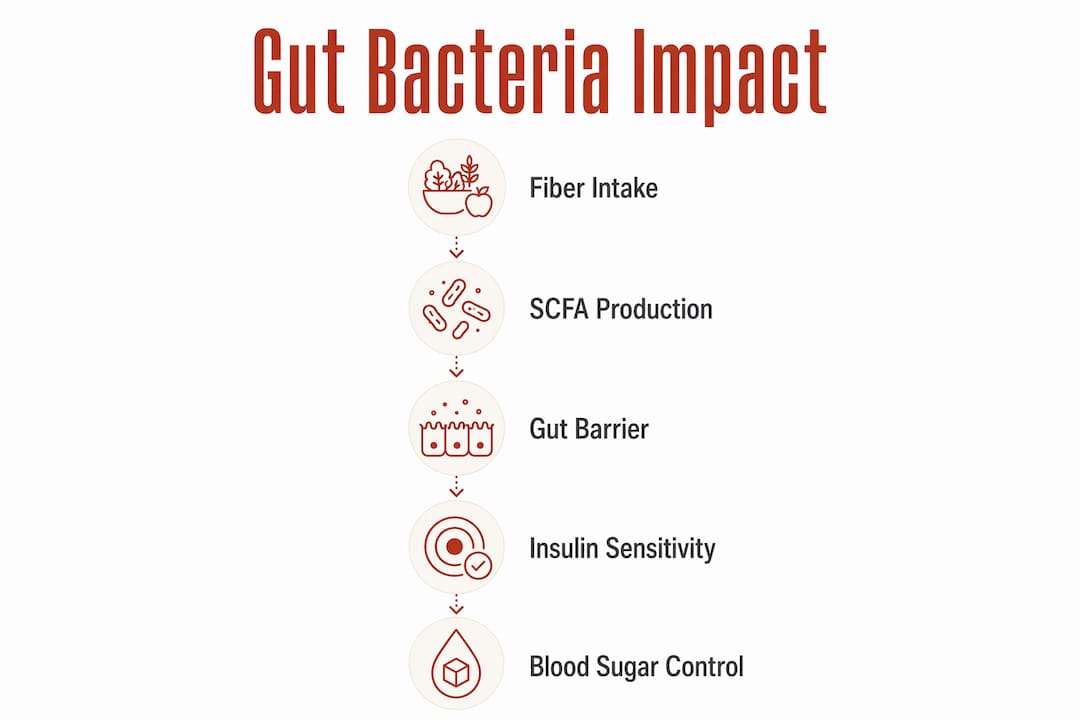
The second mechanism is gut barrier integrity. A healthy gut lining keeps bacterial components called lipopolysaccharides (LPS) contained inside the intestine. When the barrier weakens, LPS leaks into the bloodstream and triggers a condition called metabolic endotoxemia. This systemic inflammation impairs insulin signaling, making your cells resistant to insulin even when your pancreas produces adequate amounts. Experts now consider gut barrier health as important as reducing dietary sugar for maintaining insulin sensitivity.

| Bacteria Type | Effect on Glucose Control |
|---|---|
| Faecalibacterium prausnitzii | Produces butyrate, reduces gut inflammation, improves insulin sensitivity |
| Roseburia intestinalis | Generates SCFAs that stimulate GLP-1 and lower postprandial glucose |
| Akkermansia muciniphila | Strengthens gut barrier, reduces LPS leakage, improves glycemic markers |
| Bacteroides fragilis (pro-inflammatory strains) | Promotes LPS production, increases systemic inflammation, worsens insulin resistance |
| Clostridium difficile | Disrupts microbial balance, reduces SCFA output, elevates blood glucose variability |
Pro Tip: If you are managing blood sugar, prioritize dietary fiber from legumes and vegetables over probiotic supplements alone. Fiber feeds the SCFA-producing bacteria already living in your gut, which is more reliable than introducing new strains.
Does gut microbiome diversity affect type 2 diabetes risk?
Reduced microbial diversity is a consistent marker in type 2 diabetes patients. Lower SCFA-producing bacteria like Faecalibacterium prausnitzii and Roseburia correlate directly with higher HbA1c levels and elevated inflammatory markers including C-reactive protein and interleukin-6. Less diversity means fewer microbial pathways available to regulate glucose, leaving your metabolism more vulnerable to spikes and crashes.
The Western diet accelerates this problem. High saturated fat and low fiber intake selectively starve SCFA-producing bacteria while feeding pro-inflammatory species. This creates dysbiosis, a state of microbial imbalance that raises diabetes risk even before clinical symptoms appear. The gut microbiome and blood sugar relationship is not passive. It is an active, ongoing negotiation between what you eat and which microbes thrive.
Common gut microbiome changes observed in type 2 diabetes patients include:
- Significant depletion of Faecalibacterium prausnitzii and Roseburia species
- Increased abundance of pro-inflammatory Bacteroides and Clostridium strains
- Reduced production of butyrate and propionate across the gut
- Higher circulating LPS levels indicating gut barrier compromise
- Elevated branched-chain amino acid (BCAA) production linked to insulin resistance
A 16-week randomized trial found that a legume-enriched diet modulated gut microbes and decreased HbA1c while improving total cholesterol and LDL levels at weeks 4 and 12. That timeline matters. Meaningful microbiome shifts take weeks, not days, which is why consistency in dietary choices outperforms short-term interventions.
The relationship between gut flora and insulin also runs through diabetes medications. Metformin and the microbiome interact bidirectionally, meaning the drug changes microbial ecology, and those microbial changes partly explain how metformin works. This is not a side effect. It is part of the mechanism.
What dietary changes improve gut bacteria for blood sugar control?
Prebiotic fiber is the most direct dietary tool for improving the gut microbiome and blood sugar connection. Prebiotic fiber feeds Bifidobacterium, Lactobacillus, and SCFA-producing species that regulate glucose. You can learn more about prebiotic fiber and diabetes through clinical evidence connecting specific fiber types to glycemic outcomes.
A meta-analysis of 2,736 participants across 13 studies confirmed that probiotics, prebiotics, or synbiotics improve fasting glucose and HbA1c in type 2 diabetes patients by enriching beneficial genera. Synbiotics combine prebiotics and probiotics together, which produces stronger results than either alone. Fermented foods like plain yogurt, kefir, kimchi, and sauerkraut add live cultures while also delivering fiber, making them a practical dual-action option.
Here is a practical sequence for modulating your gut microbiome through diet and lifestyle:
- Increase dietary fiber to 25–35 grams daily from legumes, oats, vegetables, and whole grains to feed SCFA-producing bacteria.
- Add fermented foods three to five times per week such as plain Greek yogurt, kefir, or kimchi to introduce beneficial live cultures.
- Reduce saturated fat and ultra-processed foods that selectively feed pro-inflammatory bacterial strains and degrade gut barrier integrity.
- Exercise at moderate intensity three to five times per week since physical activity independently increases microbial diversity and SCFA output.
- Consider a synbiotic supplement combining prebiotic fiber with probiotic strains to support both microbial feeding and colonization simultaneously.
Pro Tip: Combining prebiotic fiber supplementation with a fiber-rich diet produces more consistent blood sugar benefits than probiotics alone. Single-strain supplements rarely deliver reliable glycemic improvements without the dietary foundation to support them.
How do diabetes medications interact with gut bacteria?
Metformin, the most prescribed type 2 diabetes medication, increases Akkermansia muciniphila abundance in the gut. Akkermansia muciniphila strengthens the gut lining, reduces LPS leakage, and improves glycemic parameters. This microbiome shift is now understood to be part of metformin’s mechanism of action, not just a coincidental change.
The implications are significant. If your gut microbiome is already depleted of Akkermansia muciniphila before starting metformin, the drug may be less effective. Conversely, dietary strategies that increase Akkermansia abundance could amplify metformin’s glycemic benefits. This is the foundation of personalized microbiome therapy in diabetes care.
| Medication | Microbiome Effect | Clinical Outcome |
|---|---|---|
| Metformin | Increases Akkermansia muciniphila, reduces pro-inflammatory taxa | Improved HbA1c, stronger gut barrier |
| GLP-1 receptor agonists | Modulates gut motility, shifts microbial composition | Enhanced incretin signaling, weight reduction |
| Antibiotics (broad-spectrum) | Depletes diverse microbiota, reduces SCFA output | Temporary glycemic destabilization, increased inflammation risk |
Emerging research points toward microbiome-guided prescribing, where clinicians assess a patient’s microbial baseline before selecting medications or dosages. That future is not fully here yet, but the bidirectional gut-diabetes interaction is already informing how forward-thinking practitioners approach treatment sequencing.
What microbial metabolites signal your pancreas and brain?
SCFAs act like hormones. They travel from your gut into systemic circulation and reach the pancreas, liver, and brain, where they modulate insulin secretion, glucose production, and appetite. Butyrate, in particular, reduces hepatic glucose output by improving insulin sensitivity in liver cells. This is the gut-brain-pancreas axis in action, a three-way communication network that gut bacteria help orchestrate.
LPS disrupts this network. When LPS leaks through a compromised gut barrier, it triggers toll-like receptor 4 (TLR4) activation in immune cells. That activation floods the body with inflammatory cytokines that block insulin receptor signaling at the cellular level. The result is insulin resistance that no amount of medication fully corrects without also addressing gut-derived inflammation.
Branched-chain amino acids (BCAAs) add another layer. Certain gut bacteria produce excess BCAAs, which at high circulating levels interfere with insulin signaling pathways in muscle tissue. This explains why some patients maintain controlled glucose numbers but still struggle with weight and energy, because microbial metabolites regulate appetite by mimicking or blocking hormones like GLP-1 and alpha-MSH simultaneously. Glucose control and weight management are linked through the same microbial pathways, which is why treating one without the other often produces incomplete results.
Key takeaways
The gut microbiome directly regulates blood sugar through SCFA production, gut barrier integrity, and metabolite signaling, making microbial health a core component of diabetes management.
| Point | Details |
|---|---|
| SCFAs drive insulin response | Butyrate, propionate, and acetate stimulate GLP-1 and improve insulin sensitivity directly. |
| Diversity loss raises diabetes risk | Depleted SCFA-producing bacteria correlate with higher HbA1c and systemic inflammation. |
| Diet is the primary lever | Legume-enriched and high-fiber diets shift microbial composition and lower HbA1c within weeks. |
| Medications interact with microbes | Metformin increases Akkermansia muciniphila, which partly explains its glycemic mechanism. |
| Multi-modal approaches work best | Combining diet, exercise, prebiotics, and probiotics produces more consistent blood sugar results than any single intervention. |
What i’ve learned after years of watching gut health research evolve
The most common mistake I see is expecting a probiotic capsule to fix blood sugar the way a medication does. It does not work that way. Individual responses to probiotic interventions vary widely based on genetics, baseline microbiota composition, and diet. A strain that dramatically improves one person’s fasting glucose may do nothing for someone else with a different microbial baseline.
What does work consistently is the layered approach. Dietary fiber first, fermented foods second, targeted supplementation third, and lifestyle factors like exercise and sleep woven throughout. I have also seen people get discouraged when they do not see results in two weeks. Meaningful microbiome shifts take four to twelve weeks of consistent effort. Track your HbA1c and fasting glucose at regular intervals, not daily readings that create anxiety without context.
The research direction I find most promising is microbiome-guided prescribing, where your microbial profile informs which medications and dietary strategies will work best for your specific biology. We are not fully there yet, but the science is moving fast. In the meantime, the fundamentals of improving your gut microbiome with prebiotics and whole foods remain the most reliable foundation you can build.
— Larry
Support your gut and cellular health with Tryrevivify
Managing blood sugar through gut health requires more than diet alone. Cellular oxidative stress compounds the problem by damaging the very pathways your gut bacteria are trying to support.

Tryrevivify combines superoxide dismutase (SOD) with prebiotic fiber in a patented daily formula designed to fight free radicals and support gut health at the cellular level. SOD neutralizes oxidative damage that disrupts insulin signaling, while the prebiotic fiber feeds the SCFA-producing bacteria your glucose metabolism depends on. If you are managing blood sugar and want a supplement built around the science covered in this article, explore the Tryrevivify 30-Day Supply and consult your healthcare provider about adding it to your protocol.
FAQ
Can gut bacteria regulate blood sugar on their own?
Gut bacteria significantly influence blood sugar through SCFA production and GLP-1 stimulation, but they work alongside diet, medication, and lifestyle factors rather than independently controlling glucose levels.
What gut bacteria are most important for glucose control?
Faecalibacterium prausnitzii, Roseburia intestinalis, and Akkermansia muciniphila are the most clinically studied species for improving insulin sensitivity and lowering HbA1c in type 2 diabetes patients.
How long does it take for gut microbiome changes to affect blood sugar?
Clinical trials show meaningful HbA1c improvements from dietary microbiome modulation within 4–16 weeks of consistent dietary change, not days.
Does metformin change gut bacteria?
Metformin increases Akkermansia muciniphila abundance, which strengthens the gut barrier and improves glycemic markers. This microbiome shift is now recognized as part of how metformin lowers blood sugar.
What foods best support gut bacteria for blood sugar management?
Legumes, oats, fermented foods like kefir and kimchi, and high-fiber vegetables feed SCFA-producing bacteria most effectively. A legume-enriched diet reduced HbA1c and improved cholesterol markers in a 16-week randomized trial.