

How Gut Microbiome Affects Digestion: 2026 Guide
The gut microbiome is defined as the community of trillions of microorganisms living in your digestive tract that directly controls how your body breaks down food and absorbs nutrients. These microbes are not passive passengers. They produce enzymes your body cannot make on its own, ferment fibers your stomach cannot process, and regulate the physical structure of your intestines. Understanding how gut microbiome affects digestion explains why two people can eat the same meal and experience completely different outcomes. The science behind gut health and digestion is more specific and more actionable than most people realize.
How gut microbiome affects digestion through fiber fermentation
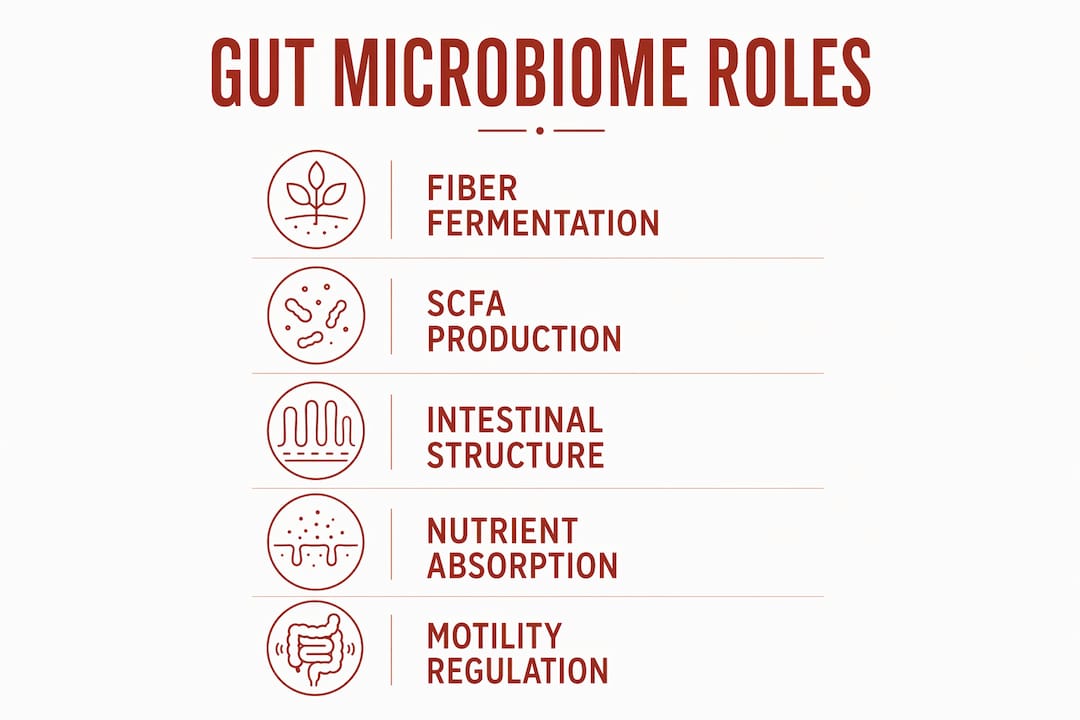
Humans lack the enzymes to digest most plant polysaccharides. That means the fiber in your oats, lentils, and apples arrives in your large intestine completely intact. Your gut microbes take over from there. Gut microbes ferment these indigestible fibers into short-chain fatty acids, or SCFAs, effectively converting what your body cannot use into a critical energy source.
The three most important SCFAs are acetate, propionate, and butyrate. They are produced in a 3:1:1 ratio of acetate to propionate to butyrate. That ratio matters because each SCFA plays a distinct role. Acetate circulates in the bloodstream and feeds peripheral tissues. Propionate travels to the liver and helps regulate glucose production. Butyrate is the primary fuel for colonocytes, the cells lining your colon wall.

Butyrate deserves special attention. It does more than feed colon cells. It maintains the tight junctions between intestinal cells that form your gut barrier. When butyrate production drops, that barrier weakens. A weakened gut barrier allows bacterial fragments and undigested particles to enter the bloodstream, triggering inflammation throughout the body.
| SCFA | Primary function | Main destination |
|---|---|---|
| Acetate | Energy substrate for peripheral tissues | Bloodstream and muscles |
| Propionate | Glucose regulation and satiety signaling | Liver |
| Butyrate | Fuel for colon cells, gut barrier integrity | Colon lining |
Pro Tip: Eat a mix of fiber types, not just one source. Soluble fiber from oats and beans feeds different microbial species than insoluble fiber from whole grains and vegetables. Diversity in fiber drives diversity in SCFA production.
In what ways does the microbiome influence nutrient absorption?
The microbiome’s impact on digestion goes far beyond fermentation. Your gut microbes physically shape the digestive tract itself. Research on germ-free mice shows that animals raised without any gut bacteria develop underdeveloped intestinal villi, the finger-like projections that line the small intestine and absorb nutrients. Smaller villi mean less surface area. Less surface area means less absorption of vitamins, minerals, and amino acids.
This finding has a direct implication for you. A depleted or imbalanced microbiome does not just cause bloating or discomfort. It structurally reduces your body’s capacity to absorb the nutrients you eat. You can have a perfect diet and still under-absorb if your microbial community is compromised.
Beyond structure, gut bacteria also influence digestion through these mechanisms:
- Enzyme production: Specific bacterial species produce enzymes like beta-glucosidase and proteases that break down plant compounds and proteins your own digestive system cannot fully process.
- Vitamin synthesis: Gut bacteria synthesize vitamin K2 and several B vitamins, including B12 precursors, folate, and biotin, directly inside your intestine.
- Motility regulation: Microbial metabolites signal the enteric nervous system to coordinate peristaltic waves, the rhythmic muscle contractions that move food through your gut. Disrupted microbiomes correlate with both constipation and diarrhea.
- Microbiome diversity: Higher microbial diversity is associated with better digestion and reduced risk of metabolic and inflammatory diseases. Low diversity is a consistent marker in people with irritable bowel syndrome, Crohn’s disease, and type 2 diabetes.
Pro Tip: Fermented foods like plain yogurt, kefir, kimchi, and sauerkraut introduce live microbial cultures that temporarily increase microbial diversity. They work best as a complement to a high-fiber diet, not a replacement for it.
How does the brain-gut axis affect digestive function?
The gut contains its own nervous system. The enteric nervous system, sometimes called the “second brain,” consists of roughly 500 million neurons embedded in the gut wall. It adjusts digestion based on meal composition, stress signals, and microbial input, operating largely independent of the brain in your skull. Digestion is not a passive, mechanical process. It is a dynamic, nervous-system-controlled event.
The brain and gut communicate in both directions through the vagus nerve, immune signaling, and microbial metabolites. This bidirectional pathway explains a phenomenon most people have experienced: anxiety before a big event causes stomach cramps, or a heavy meal triggers drowsiness and mental fog. The connection runs both ways.
Chronic stress is particularly damaging to digestive health. Stress hormones damage the gut lining, increasing intestinal permeability, a condition commonly called “leaky gut.” This worsens conditions like irritable bowel syndrome and inflammatory bowel disease. The oxidative stress effects on gut permeability are well-documented and clinically significant.
“Bidirectional brain-gut communication explains why stress exacerbates digestive disorders and why holistic treatments targeting nervous system balance can improve gut health.” — Harvard Health
The practical takeaway is that managing stress is a direct digestive intervention, not just a wellness nicety. Mind-body practices that calm the nervous system produce measurable improvements in gut function. Meditation, yoga, and hypnotherapy improve digestive symptoms by activating the parasympathetic nervous system, the “rest and digest” state that allows full digestive function to operate. These are not soft recommendations. They are evidence-backed tools for gut health.
What dietary and lifestyle choices best support gut microbiome health?
Diet is the single most powerful lever you have over your gut microbiome. The composition of your microbial community shifts within 24–48 hours of a dietary change. That speed is both an opportunity and a warning.
Here are the most evidence-supported steps you can take:
- Hit your fiber targets. Clinical guidelines recommend 25 grams per day for women and 38 grams per day for men, along with 5–7 servings of fruits and vegetables daily. Most Americans consume fewer than 15 grams per day. Closing that gap is the highest-return action for gut health.
- Prioritize dietary diversity. Eating 30 or more different plant foods per week is associated with significantly higher microbial diversity. This does not require exotic ingredients. Rotating between different grains, legumes, nuts, seeds, and vegetables accomplishes the same goal.
- Understand the limits of commercial probiotics. Most probiotic strains in supplements do not permanently colonize the gut. Benefits disappear when supplementation stops. Lasting microbiome changes come from sustained dietary patterns that feed your native beneficial bacteria, not from temporary supplementation.
- Protect your sleep. Poor sleep disrupts the circadian rhythm of gut microbes, which follow a 24-hour cycle tied to your sleep-wake pattern. Even two nights of poor sleep measurably reduces microbial diversity.
- Exercise consistently. Regular aerobic exercise increases the abundance of butyrate-producing bacteria, independent of diet. A 30-minute walk five days a week produces detectable changes in gut microbial composition within six weeks.
- Reduce ultra-processed food intake. Emulsifiers, artificial sweeteners, and preservatives found in ultra-processed foods directly disrupt microbial communities and reduce SCFA production. Replacing one ultra-processed meal per day with whole foods produces measurable microbiome improvements.
Pro Tip: Prebiotic fiber, the kind found in garlic, onions, leeks, asparagus, and green bananas, feeds your existing beneficial bacteria more directly than most probiotic supplements. Learn more about improving your microbiome with prebiotics to build a targeted approach.
Key takeaways
The gut microbiome drives digestion by fermenting fiber into SCFAs, shaping intestinal structure, regulating motility, and communicating with the brain through the enteric nervous system.
| Point | Details |
|---|---|
| SCFAs are the core output | Acetate, propionate, and butyrate produced in a 3:1:1 ratio fuel colon cells and protect the gut barrier. |
| Microbiome shapes gut structure | Without healthy gut bacteria, intestinal villi shrink and nutrient absorption capacity drops significantly. |
| Stress directly harms digestion | Chronic stress damages the gut lining and disrupts microbial balance, worsening IBS and IBD. |
| Fiber targets matter | Women need 25g and men need 38g of fiber daily to adequately support microbial fermentation. |
| Probiotics have real limits | Commercial probiotic strains do not permanently colonize the gut; sustained dietary habits do the lasting work. |
Why I think most people are solving gut health backwards
After spending years reading the research on digestive health, I keep seeing the same pattern. People reach for a probiotic bottle first and change their diet last. That order is backwards, and the science confirms it.
The gut microbiome is not a fixed organ you top up with supplements. It is a living ecosystem that responds to what you feed it every single day. The most sophisticated probiotic product on the market cannot outperform a consistent diet rich in diverse plant fibers. The bacteria you want to cultivate are already in your gut. They just need the right fuel.
What I find genuinely underappreciated is the brain-gut connection. Most people treat stress management as a mental health issue. Clinically, it is also a gut health issue. Chronic stress physically damages the intestinal lining. That damage impairs absorption, increases inflammation, and shifts microbial populations toward less beneficial species. You cannot supplement your way out of a chronically stressed nervous system.
The other misconception I see constantly is treating gut health as a single metric. Researchers at UC Davis now define gut health as normal gastrointestinal function without disease or symptoms, not as any specific microbiome composition. That framing matters. It shifts the focus from chasing a perfect microbial profile to building habits that keep your digestive system functioning without disruption. Diet, sleep, exercise, and stress management work together as a system. Treat them that way.
— Larry
Support your gut health at the cellular level with Tryrevivify
Understanding the microbiome’s role in digestion is the first step. Supporting it at the cellular level is the next one.
Tryrevivify combines superoxide dismutase (SOD) with prebiotic fiber in a patented daily formula. SOD is your body’s primary antioxidant enzyme, neutralizing free radicals that drive cellular damage and gut inflammation. The prebiotic fiber component directly feeds beneficial gut bacteria, supporting the SCFA production and microbial diversity this article covers. Together, they work at the cellular level to reduce oxidative stress while nourishing the microbial community your digestion depends on. If you are building a diet and lifestyle foundation for gut health, Tryrevivify is designed to complement that work. Explore the 30-day supply and see how cellular and microbial support work together.
FAQ
What is the gut microbiome’s main role in digestion?
The gut microbiome ferments dietary fibers your body cannot digest, producing short-chain fatty acids that fuel colon cells, maintain the gut barrier, and regulate intestinal motility. Without these microbial processes, digestion and nutrient absorption are significantly impaired.
How do gut bacteria affect nutrient absorption?
Gut bacteria support the physical development of intestinal villi, the structures responsible for absorbing nutrients. Research on germ-free animals shows that a missing microbiome leads to underdeveloped villi and reduced absorption capacity across vitamins, minerals, and amino acids.
Does stress really impact gut health?
Yes. Chronic stress triggers hormones that damage the gut lining, increase intestinal permeability, and disrupt microbial balance. This worsens conditions like IBS and IBD, making stress management a direct component of digestive health care.
Are probiotic supplements effective for gut health?
Most commercial probiotic strains do not permanently colonize the gut and their effects disappear after supplementation stops. Lasting microbiome improvements come from sustained dietary changes, particularly increased fiber and plant food diversity, that feed your native beneficial bacteria.
How much fiber do you need for a healthy gut microbiome?
Clinical guidelines recommend 25 grams of fiber per day for women and 38 grams per day for men, along with 5–7 daily servings of fruits and vegetables. Most Americans fall well short of these targets, which directly limits microbial fermentation and SCFA production.