

Why Endothelium Health Prevents Heart Disease
Endothelial dysfunction is defined as the earliest pathological stage of heart disease, preceding visible plaque or structural damage by years. The endothelium, a single layer of cells lining every blood vessel in your body, is not passive tissue. It is a dynamic regulatory organ that controls blood flow, inflammation, and clotting simultaneously. When it fails, the conditions for heart attack and stroke are already forming. Understanding why endothelium health prevents heart disease is the first step toward protecting your cardiovascular system before damage becomes irreversible.
Why endothelium health prevents heart disease
The endothelium regulates vascular homeostasis by secreting nitric oxide and prostacyclin, two molecules that keep blood vessels relaxed and clot-free. Nitric oxide signals smooth muscle cells in artery walls to relax, widening the vessel and lowering blood pressure. Prostacyclin prevents platelets from clumping together, reducing the risk of dangerous clots. Together, these molecules act like a continuous maintenance crew, keeping blood moving freely and inflammation in check.

When the endothelium is healthy, it also acts as a physical barrier. It controls which molecules pass from the bloodstream into artery walls. This barrier function is what stops low-density lipoproteins (LDL) from embedding in arterial tissue and starting the chain reaction that leads to plaque.
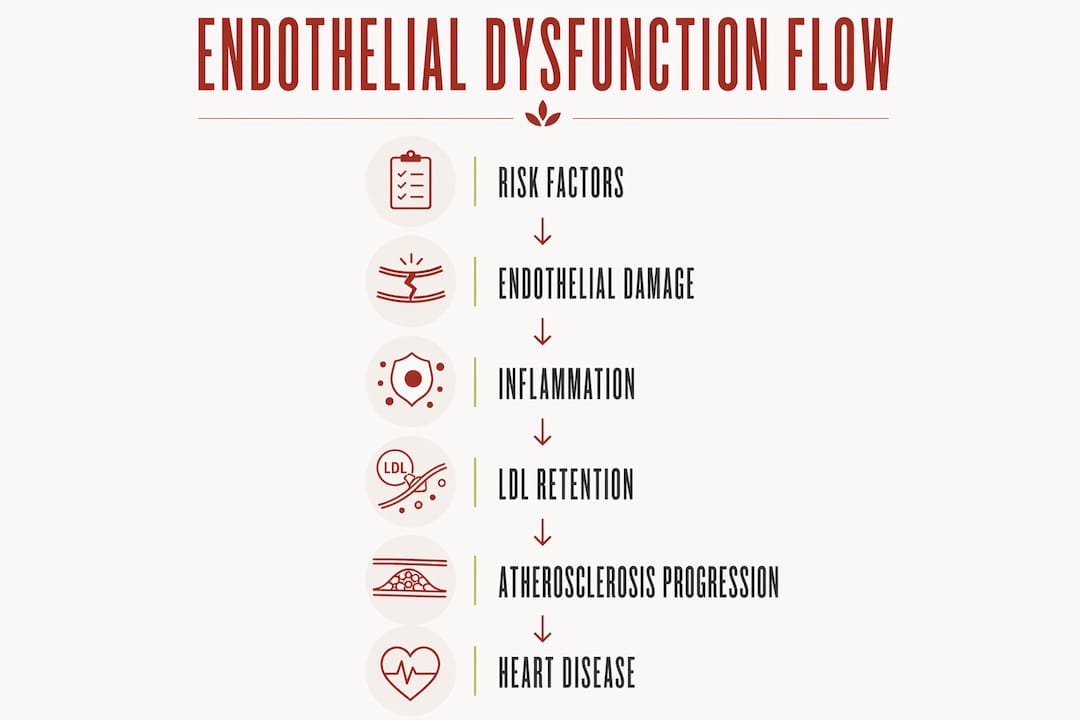
Endothelial dysfunction breaks both of these protective systems at once. Loss of nitric oxide production triggers inflammation and opens the door to plaque formation. The artery wall becomes sticky, attracting white blood cells and lipid deposits. That is not a late-stage event. It is the opening move in cardiovascular disease.
- Nitric oxide deficiency causes arteries to stiffen and narrow, raising blood pressure and reducing oxygen delivery to the heart.
- Barrier breakdown allows LDL cholesterol to penetrate artery walls, where it oxidizes and triggers an immune response.
- Clotting imbalance shifts the blood toward a pro-thrombotic state, increasing the risk of sudden blockages.
- Chronic low-grade inflammation accelerates every stage of atherosclerosis, from early fatty streaks to full plaque rupture.
Pro Tip: Ask your doctor specifically about endothelial function, not just cholesterol levels. Standard lipid panels do not measure how well your arteries are actually working.
What causes endothelial dysfunction and how does it lead to heart disease?
Endothelial damage does not happen overnight. Oxidative stress from smoking and poor diet impairs nitric oxide bioavailability, triggering pro-inflammatory changes and clotting imbalance. Each of these factors compounds the others, creating a self-reinforcing cycle of vascular damage.
The most common causes of endothelial impairment include:
- Smoking: Cigarette toxins directly damage endothelial cells and reduce nitric oxide production within minutes of exposure.
- Poor diet: Diets high in processed foods and trans fats increase oxidative stress and systemic inflammation, both of which degrade endothelial function.
- Hypertension: High blood pressure creates mechanical shear stress on artery walls, physically injuring endothelial cells over time.
- Type 2 diabetes and insulin resistance: Elevated blood glucose glycates proteins and generates free radicals that impair endothelial signaling.
- Chronic psychological stress: Sustained cortisol elevation promotes vascular inflammation and reduces nitric oxide synthesis.
Once the endothelium is impaired, lipid retention and chronic inflammation accelerate atherosclerosis progression. LDL particles enter the artery wall, oxidize, and trigger macrophage recruitment. Those macrophages become foam cells, the building blocks of arterial plaque. Plaque growth narrows the artery and, when it ruptures, causes heart attacks.
The vicious cycle is the most dangerous part. Endothelial damage worsens inflammation, which causes more endothelial damage. Without intervention, this loop runs silently for years before any symptom appears.
| Risk factor | Primary mechanism of endothelial harm |
|---|---|
| Smoking | Reduces nitric oxide, increases oxidative stress |
| High blood pressure | Mechanical injury to endothelial cells |
| Poor diet | Elevates LDL oxidation and systemic inflammation |
| Diabetes | Glycation and free radical generation |
| Chronic stress | Cortisol-driven inflammation and nitric oxide suppression |
Detecting this damage early is a real challenge. Routine cardiovascular tests often miss early endothelial dysfunction. Non-invasive tools like digital thermal monitoring and biomarkers such as NT-pro-BNP improve early diagnosis. High NT-pro-BNP levels in coronary artery disease patients correlate directly with lower vascular reactivity index scores, a measurable sign of endothelial impairment.
Pro Tip: If you have two or more cardiovascular risk factors, ask your cardiologist about NT-pro-BNP testing and vascular reactivity assessment. These tools catch problems that standard stress tests miss.
Can endothelial dysfunction be reversed?
The endothelium is a plastic, dynamic organ. Early intervention breaks the atherosclerosis cycle before structural damage becomes permanent. This is one of the most clinically significant facts in cardiovascular medicine, and most people never hear it.
Lifestyle modifications serve as a primary prevention strategy and can reverse early stages of dysfunction. The changes that matter most include:
- Aerobic exercise: Regular moderate-intensity exercise, such as brisk walking or cycling, increases nitric oxide production and reduces arterial stiffness within weeks. The effect is dose-dependent. More consistent activity produces greater endothelial benefit.
- Smoking cessation: Stopping smoking is the single fastest way to reduce endothelial oxidative stress. Vascular function begins improving within days of quitting.
- Diet rich in fruits, vegetables, and healthy fats: Polyphenols in berries and leafy greens support nitric oxide synthesis. Omega-3 fatty acids from sources like salmon and walnuts reduce systemic inflammation that degrades endothelial function.
- Stress management: Practices like meditation, controlled breathing, and adequate sleep lower cortisol and reduce the inflammatory burden on artery walls.
- Antioxidant support: Reducing oxidative stress protects nitric oxide from being neutralized before it can act. This is where cellular-level support, including antioxidant enzymes like superoxide dismutase, becomes relevant to nitric oxide and oxidative stress balance.
Incremental, consistent lifestyle changes have compounding benefits on endothelial integrity even when they are not immediately visible in routine tests. You do not need a dramatic overhaul. You need sustained, repeatable habits that reduce the daily burden on your vascular system.
Advanced therapies are also under investigation. Small molecules and stem cell research target endothelial barrier restoration and prevention of inflammatory cell transition. These are not yet standard care, but they confirm that the medical community views endothelial repair as a legitimate and achievable goal.
How can you monitor and maintain endothelial health long-term?
Monitoring endothelial health requires going beyond a standard annual checkup. Biomarkers like NT-pro-BNP serve as integrative indicators linking cardiac stress and systemic endothelial dysfunction, aiding in risk stratification. Asking your doctor to include this marker in your bloodwork is a practical first step.
Digital thermal monitoring (DTM) is a non-invasive tool that measures vascular reactivity by tracking skin temperature changes after blood flow is briefly restricted. It produces a vascular reactivity index (VRI) score that reflects endothelial function directly. DTM is not yet universally available, but it is increasingly used in cardiology practices focused on early prevention.
For long-term maintenance, the most effective approach combines several strategies:
- Annual cardiovascular risk assessment that includes blood pressure, fasting glucose, lipid panel, and NT-pro-BNP where indicated.
- Consistent aerobic activity tracked over months, not days, since endothelial benefits accumulate gradually.
- Dietary quality scoring using tools like the Mediterranean Diet Adherence Screener to ensure consistent intake of endothelium-supportive foods.
- Supplement support targeting oxidative stress and cellular health, particularly for people with multiple risk factors.
- Open conversations with your healthcare provider about vascular function specifically, not just cholesterol numbers.
The connection between gut health and systemic inflammation is also worth noting. Research on gut health and inflammation shows that systemic inflammatory signals originating in the gut can impair endothelial function over time. A diet that supports gut microbiome diversity also supports vascular health. These systems are not separate. They are interconnected.
Endothelial dysfunction commonly precedes detectable structural heart disease by years. That window is your opportunity. Use it.
Key Takeaways
Endothelial health prevents heart disease by maintaining nitric oxide production, controlling inflammation, and stopping plaque formation before structural damage begins.
| Point | Details |
|---|---|
| Endothelium is the first line of defense | Dysfunction precedes visible heart disease by years, making early action the highest-value intervention. |
| Nitric oxide is the key molecule | Loss of nitric oxide production triggers inflammation, arterial stiffness, and clot risk simultaneously. |
| Common risk factors are controllable | Smoking, poor diet, hypertension, and chronic stress are the leading drivers of endothelial damage. |
| Dysfunction is reversible | Exercise, diet, and smoking cessation restore endothelial function and break the atherosclerosis cycle. |
| Standard tests often miss it | NT-pro-BNP and digital thermal monitoring detect endothelial impairment before symptoms appear. |
The silent warning most heart patients never get
I have spent years reading cardiovascular research, and one pattern keeps appearing: people arrive at a cardiologist’s office after a heart attack or serious arrhythmia, and the endothelium was already failing silently for a decade before that. The standard medical system is built to catch structural problems. It is not built to catch functional ones.
What frustrates me most is how treatable early endothelial dysfunction actually is. Exercise, diet, and stress reduction are not vague wellness advice. They are specific, evidence-backed interventions that restore nitric oxide production and reduce arterial inflammation. The biology is clear. The gap is awareness.
My honest view is that most people concerned about heart health are focused on the wrong metrics. Cholesterol numbers matter, but they do not tell you whether your artery walls are functioning correctly. Vascular reactivity does. NT-pro-BNP does. These are the conversations worth having with your doctor, and most people never have them because they do not know to ask.
The endothelium is not a passive bystander. It is the organ that decides whether your arteries stay healthy or start building plaque. Treat it accordingly.
— Larry
Cellular health support for your cardiovascular system
Heart disease prevention starts at the cellular level, and the endothelium is where that work is most visible. Tryrevivify was built around exactly this idea.
Tryrevivify combines superoxide dismutase (SOD) and prebiotic fiber in a patented formula designed to fight free radicals and reduce oxidative stress throughout the body. SOD is the primary antioxidant enzyme your cells use to neutralize the superoxide radicals that degrade nitric oxide and damage endothelial tissue. Supporting SOD activity means giving your vascular system a better chance at staying functional. The Revivify 30-day supply is a practical starting point for anyone building a long-term cellular heart health strategy alongside lifestyle changes.
FAQ
What is endothelial dysfunction?
Endothelial dysfunction is the loss of the endothelium’s ability to regulate blood flow, inflammation, and clotting through nitric oxide and prostacyclin. It is the earliest identifiable stage of cardiovascular disease, often present years before symptoms or structural damage appear.
How does endothelial dysfunction lead to heart disease?
Impaired endothelial function allows LDL cholesterol to enter artery walls, triggers chronic inflammation, and creates a pro-clotting environment. These three processes together drive atherosclerosis, the buildup of arterial plaque that causes heart attacks and strokes.
Can you reverse endothelial dysfunction without medication?
Yes. Lifestyle changes including regular aerobic exercise, smoking cessation, and a diet rich in fruits, vegetables, and healthy fats restore nitric oxide production and reduce inflammation, reversing early-stage endothelial dysfunction.
What tests detect endothelial dysfunction early?
NT-pro-BNP blood testing and digital thermal monitoring (DTM) are two tools that assess endothelial function before structural heart disease develops. Standard lipid panels and stress tests do not measure vascular reactivity directly.
How does oxidative stress damage the endothelium?
Oxidative stress neutralizes nitric oxide before it can act, leaving artery walls unable to relax or resist inflammation. Free radicals generated by smoking, poor diet, and elevated blood glucose are the primary sources of this damage.