

Supplements for Skin Cell Repair: What Works and Why
The most evidence-backed supplements supporting skin cell repair are vitamin A, vitamin C, zinc, omega-3 fatty acids (EPA/DHA), collagen peptides, and select antioxidants such as astaxanthin and EGCG from green tea, with certain probiotic strains rounding out the list. Start with food first, address any documented deficiencies with clinician guidance, and add clinically dosed supplements only where your diet genuinely falls short. Most people see measurable changes in skin hydration, elasticity, or wound healing within 8–12 weeks, based on short-term clinical trials reviewed by the American Academy of Dermatology.
One structural detail worth knowing up front: the outer skin layer contains about five times more zinc than the layer beneath it. That concentration alone signals how central micronutrients are to the skin’s daily repair cycle.
Table of Contents
- Which supplements actually support skin cell repair?
- How do supplements support skin repair at the cellular level?
- What do clinical evidence and dermatology experts say?
- Safety, dosing, and realistic timelines
- How do you build a practical food-first supplement plan?
- Key Takeaways
- A grounded take on cellular skin health
- Tryrevivify and the cellular-support approach
- Useful sources and further reading
Which supplements actually support skin cell repair?
The core nutrients each fill a distinct biological role. Here is what the evidence shows for each one.
Vitamin A drives cell turnover and protects existing collagen from enzymatic breakdown. Supplemental forms include preformed retinol (retinyl palmitate or retinyl acetate) and provitamin A carotenoids such as beta-carotene. Preformed vitamin A is more potent but carries a toxicity ceiling; provitamin A converts only as needed, making it a safer default for most people. Food sources: liver, eggs, dairy, and orange-yellow vegetables.
Vitamin C (ascorbic acid or buffered sodium ascorbate) is the rate-limiting cofactor for collagen synthesis. Without adequate vitamin C, the proline and lysine residues that give collagen its tensile strength cannot be properly hydroxylated. It also scavenges free radicals in the aqueous compartments of skin cells. Citrus, bell peppers, and kiwi are the richest food sources.

Zinc supports cell division, DNA synthesis, and wound healing. Zinc gluconate and zinc picolinate tend to absorb better than zinc oxide. Typical supplemental doses run 8–11 mg daily for adults, matching the Recommended Dietary Allowance, with an established tolerable upper limit of 40 mg/day per the NIH Office of Dietary Supplements.
Omega-3 fatty acids (EPA and DHA) reduce pro-inflammatory eicosanoids and support the lipid barrier that keeps moisture in. The VA Whole Health Library documents their role in decreasing inflammatory compounds and improving conditions like eczema and psoriasis while supporting collagen-related structural proteins. Fish oil is the most common supplemental form; algae-derived DHA is the plant-based alternative.
Collagen peptides supply the glycine, proline, and hydroxyproline building blocks that fibroblasts use to rebuild the dermal matrix. Short-term trials of 8–24 weeks show benefits for wound healing, elasticity, dermal collagen density, and hydration.
Antioxidants and flavonoids (EGCG, astaxanthin, resveratrol) regulate cell growth, differentiation, and programmed cell death. The VA Whole Health Library specifically highlights EGCG’s photoprotective and antioxidant effects. Flavonoid-rich foods like berries, green tea, and dark chocolate are the most practical entry point before reaching for capsules.
Probiotics round out the list. Strains such as Lactobacillus johnsonii and Lactobacillus paracasei have been shown to limit UV damage and speed recovery after skin injury, connecting gut immune function directly to skin resilience.
| Nutrient | High-food sources | Common supplemental forms |
|---|---|---|
| Vitamin A | Liver, eggs, sweet potato, carrots | Retinyl palmitate, beta-carotene |
| Vitamin C | Bell peppers, citrus, kiwi, broccoli | Ascorbic acid, sodium ascorbate |
| Zinc | Oysters, beef, pumpkin seeds, legumes | Zinc gluconate, zinc picolinate |
| Omega-3 (EPA/DHA) | Salmon, sardines, mackerel | Fish oil, algae oil |
| Collagen precursors | Bone broth, chicken skin, egg whites | Hydrolyzed collagen peptides |
| Flavonoids/antioxidants | Berries, green tea, dark chocolate | EGCG extract, astaxanthin, resveratrol |
| Probiotics | Yogurt, kefir, fermented vegetables | Lactobacillus strains |
Pro Tip: Pair vitamin C with your collagen peptide supplement. Vitamin C is required for the enzymatic step that stabilizes the collagen triple helix, so taking them together gives fibroblasts both the raw material and the tool to use it.
How do supplements support skin repair at the cellular level?
Each supplement class targets a specific repair mechanism rather than skin health in a vague, general sense. Understanding those pathways helps you choose with intention.
Collagen synthesis depends on vitamin C acting as a cofactor for prolyl and lysyl hydroxylase enzymes. Without it, newly formed collagen chains cannot cross-link properly, and the resulting matrix is structurally weak. Collagen peptides supply the amino acid substrate; vitamin C supplies the enzymatic machinery.
Antioxidant defense works through two complementary routes. Enzymatic antioxidants (like superoxide dismutase) neutralize reactive oxygen species before they damage DNA or membrane lipids. Dietary antioxidants such as EGCG and astaxanthin provide a second layer of protection, quenching free radicals that escape the enzymatic system. Think of it as a relay: the enzymes run the first leg, and dietary antioxidants finish the race.
Inflammation control is where omega-3s do their clearest work. EPA competes with arachidonic acid for the same enzymes, shifting the balance away from pro-inflammatory prostaglandins and leukotrienes toward less inflammatory mediators. The result is a calmer cellular environment where repair can proceed without chronic inflammatory interference.
Cell proliferation and DNA repair require zinc. It is a structural component of dozens of transcription factors and DNA repair enzymes. Without adequate zinc, the cell cycle stalls at the point where damaged DNA should be corrected before replication.
Probiotics extend this systemic picture to the gut-skin axis. By supporting a balanced gut microbiome, strains like Lactobacillus johnsonii modulate systemic immune responses that influence how aggressively skin reacts to UV exposure and how quickly it recovers afterward. The gut-skin connection is not a metaphor — it is a documented immunological pathway.
Clinical endpoints that track these mechanisms include wound closure speed, dermal collagen density on ultrasound, transepidermal water loss, and erythema scores after UV challenge.
What do clinical evidence and dermatology experts say?
The honest answer is that the evidence is uneven. Nutrient correction for documented deficiencies has strong support. Short-term benefits for collagen peptides and omega-3s in inflammatory skin conditions are well-documented. Many flavonoid and botanical supplement claims, however, still rest on in vitro or animal data rather than rigorous human trials.
The American Academy of Dermatology is direct on this: get nutrients from food when possible, and use supplements primarily to treat documented deficiencies under clinician guidance. That position is not a dismissal of supplements — it is a call for precision over marketing.
A PubMed systematic review on vitamins and skin health found that the skin relies heavily on micronutrients for barrier integrity, and that more than 2 billion people worldwide have essential vitamin or mineral intake deficiencies. Correcting those deficiencies is where supplementation has the clearest, most defensible benefit.
Where evidence is strongest: collagen peptides (8–24 week trials showing elasticity and hydration gains), omega-3s for eczema and psoriasis, and zinc for wound healing. Where human data are thinner: most single-ingredient flavonoid supplements and many “beauty blend” formulas with undisclosed doses.
Safety, dosing, and realistic timelines
Most skin repair supplements are safe at recommended doses. Problems arise at high doses, with certain medications, or during pregnancy.
Key dose ranges and cautions:
- Vitamin C: 65–90 mg/day RDA; supplemental doses up to 500–1,000 mg are common and generally well tolerated. Upper limit is 2,000 mg/day.
- Zinc: 8–11 mg/day RDA; upper limit 40 mg/day. High-dose zinc interferes with copper absorption and can reduce the effectiveness of certain antibiotics (tetracyclines, fluoroquinolones).
- Omega-3 (EPA/DHA): 250–500 mg/day for general health; higher doses used therapeutically. Anyone on blood thinners should consult a clinician before exceeding 1 g/day.
- Preformed vitamin A: Upper limit 3,000 mcg/day for adults. Teratogenic at high doses — avoid supplemental preformed vitamin A during pregnancy.
- Collagen peptides: Trials typically use 2.5–10 g/day; no established upper limit, but GI discomfort can occur at high doses.
The AAD notes that supplements can cause allergic reactions, gastrointestinal upset, and toxicity at high doses, and that the supplement industry’s loose regulation makes clinician oversight and third-party testing critical.
Timeline: Most measurable improvements in skin hydration, elasticity, or collagen density appear at 8–12 weeks in short-term clinical trials. Wound-healing endpoints can show up sooner, sometimes within 2–4 weeks, depending on the intervention and baseline nutritional status.
Pro Tip: Before adding any supplement, ask your clinician to check serum zinc, 25-OH vitamin D, and a basic metabolic panel. Supplementing a nutrient you are not deficient in rarely moves the needle on skin outcomes and occasionally causes harm.
How do you build a practical food-first supplement plan?
Start with diet, then layer in supplements only where gaps exist.
- Evaluate your diet and lifestyle. Log your food intake for a week and note sun exposure, smoking status, and alcohol use. These factors deplete vitamin C, zinc, and antioxidant reserves faster than diet alone can replenish them.
- Test for deficiencies. Ask your clinician for serum zinc, ferritin, vitamin D, and a complete blood count if skin repair is a concern. Supplementing blind is less effective and occasionally counterproductive.
- Choose transparent products. Look for standardized ingredient names (e.g., “zinc gluconate 15 mg” not “zinc complex”), clear per-serving doses, and third-party certification from USP, NSF International, or ConsumerLab. Avoid proprietary blends that hide individual ingredient amounts.
- Pair supplements with topical and lifestyle measures. Broad-spectrum SPF 30+ sunscreen, adequate hydration, and smoking cessation all amplify what supplements can do at the cellular level. No supplement compensates for daily UV damage or chronic dehydration.
Product selection checklist:
- Standardized ingredient names and doses on the label
- Third-party certification (USP, NSF, or ConsumerLab)
- No proprietary blends masking individual doses
- Clear allergen labeling
- Manufacturer transparency about sourcing and testing
Pro Tip: Gut health directly affects how well you absorb fat-soluble nutrients like vitamin A and omega-3s. If you have digestive issues, address nutrient absorption barriers before stacking supplements.
Key Takeaways
Vitamin A, C, zinc, omega-3s, collagen peptides, and select antioxidants are the most evidence-backed nutrients for skin cell repair, with measurable benefits typically appearing at 8–12 weeks under a food-first, clinician-guided approach.
| Point | Details |
|---|---|
| Lead with food, not capsules | Whole foods supply cofactors and fiber that isolated supplements cannot replicate. |
| Test before you supplement | Clinician testing for zinc, vitamin D, and iron prevents blind supplementation with little benefit. |
| Expect 8–12 weeks | Short-term clinical trials consistently show collagen, hydration, and elasticity gains at this window. |
| Demand third-party testing | USP, NSF, or ConsumerLab certification confirms dose accuracy and purity in a loosely regulated market. |
| Tryrevivify’s cellular approach | Tryrevivify combines superoxide dismutase and prebiotic fiber to support antioxidant defense and nutrient absorption at the cellular level. |
A grounded take on cellular skin health
The supplement industry has a habit of selling single-ingredient solutions to a multi-system problem. Skin repair is not a vitamin C deficiency waiting to be fixed. It is the output of collagen synthesis, antioxidant defense, inflammation control, cell turnover, and gut-mediated nutrient absorption all working in concert. When one system is stressed — by UV exposure, poor diet, or chronic inflammation — the others compensate until they cannot.
What most guides understate is the gut-skin axis. Your skin’s ability to use the nutrients you ingest depends on how well your gut absorbs and delivers them. A person with compromised gut lining integrity can take a well-formulated collagen supplement and absorb a fraction of what the label promises. That is why oxidative stress and gut lining repair belong in the same conversation as skin supplements.
The other thing worth saying plainly: the 8–12 week timeline is real, but it assumes consistency. Most people abandon a supplement regimen at week four because they do not see dramatic results. Skin turnover cycles run roughly 28 days; collagen remodeling takes longer. Patience and consistency matter more than which brand you choose.
Tryrevivify and the cellular-support approach
Skin repair supplements work best as part of a broader cellular-health strategy, not as a standalone fix. That is the premise behind Tryrevivify.
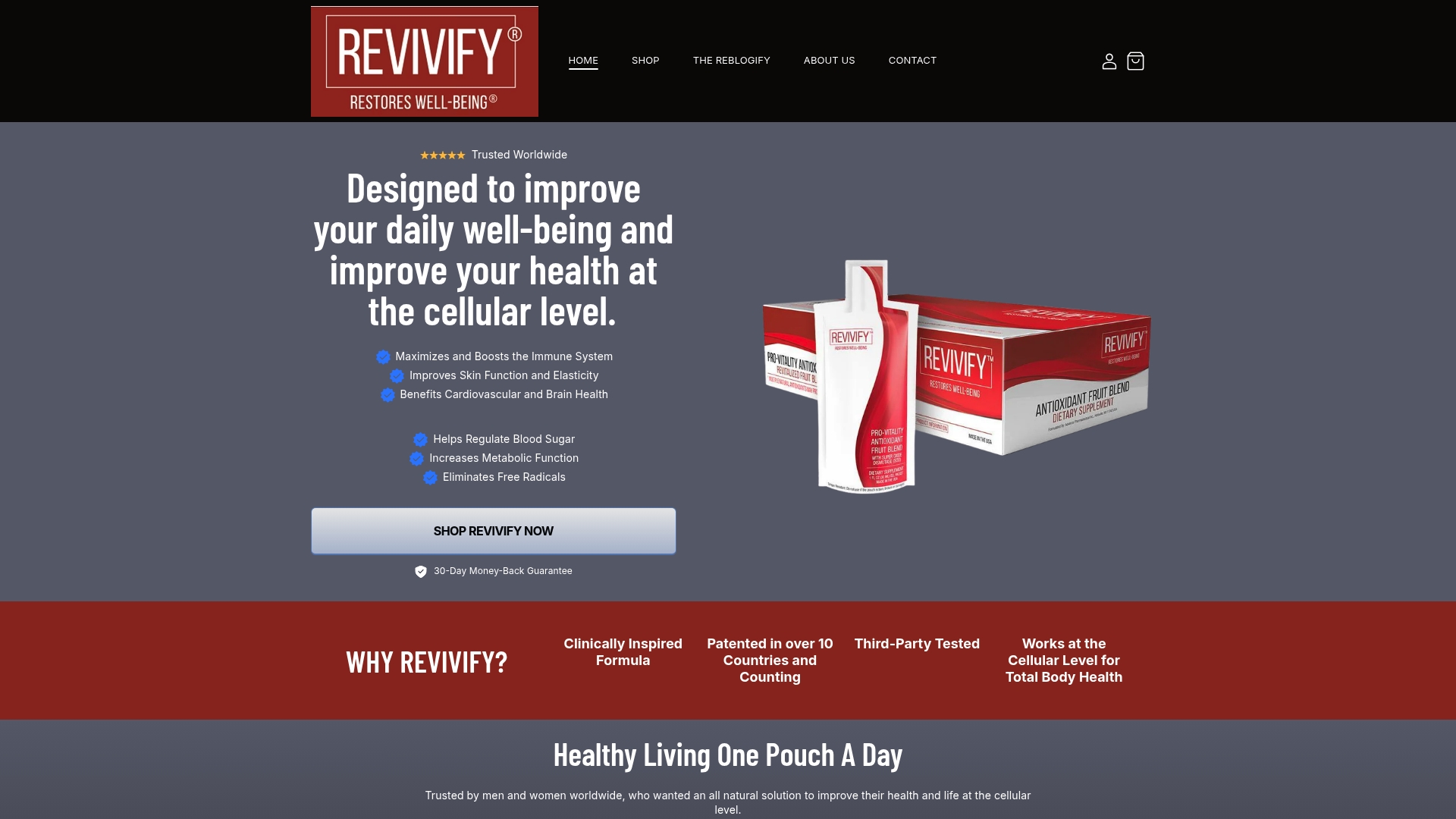
Tryrevivify combines superoxide dismutase (SOD), the body’s primary enzymatic antioxidant, with prebiotic fiber in a patented daily formula. SOD is the first line of defense against the superoxide radicals that damage skin cell membranes and collagen fibers. The prebiotic fiber component supports the gut microbiome that governs nutrient absorption and systemic immune tone — the same gut-skin axis that determines how effectively your dietary and supplemental nutrients reach skin cells.
This is not a replacement for vitamin C, zinc, or omega-3s. It is a complementary layer that addresses cellular oxidative stress and absorption infrastructure. If you have already addressed dietary gaps and want systemic antioxidant support, check Tryrevivify’s ingredient transparency and third-party testing information at tryrevivify.com before adding it to your regimen.
Useful sources and further reading
Consult a board-certified dermatologist for a personalized supplement plan. The sources below support the claims in this article and are suitable starting points for deeper research.
- American Academy of Dermatology — Supplements for skin: AAD guidance on food-first strategy, clinician oversight, and supplement safety.
- PubMed systematic review — Role of vitamins in skin health: Evidence base for micronutrient roles in skin barrier integrity and global deficiency prevalence.
- VA Whole Health Library — Supplements for skin health: Summaries of omega-3, flavonoid, probiotic, and collagen evidence with dosing context.
- WebMD — Vitamins and nutrients for healthy skin: Accessible summaries of vitamin A, C, zinc, and omega-3 roles and food sources.
- Gut-skin connection guide — Tryrevivify: How digestive health and nutrient absorption affect skin cell restoration.
- Microbiome and skin health — Tryrevivify: Mechanisms linking gut microbiome balance to skin clarity and repair.
- Free radicals and premature aging — Tryrevivify: How oxidative damage accelerates skin aging and what antioxidant strategies address it.
This article is general health information, not medical advice. Confirm supplement choices and dosing with a qualified clinician or board-certified dermatologist for your specific situation.