

How Microbiome Influences Skin Health and Glow
Your skin is not a blank surface waiting for the right moisturizer. It is a living ecosystem, home to trillions of bacteria, fungi, and viruses that collectively form your skin microbiome, the technical term researchers use for this microbial community. Understanding how microbiome influences skin health has shifted from niche science to mainstream dermatology over the past decade, and for good reason. The microbes on your skin and in your gut are actively managing inflammation, barrier integrity, and even how your complexion ages. What follows is a science-grounded breakdown of what that means for your skin and what you can actually do about it.
Table of Contents
- Key takeaways
- How microbiome influences skin health at the cellular level
- The gut-skin axis: how gut health shapes your complexion
- Microbiome-targeted treatments: what actually works
- Practical microbiome skincare habits that support your skin daily
- My take on why skin care still misses the microbiome
- Support your skin from the inside out with Tryrevivify
- FAQ
Key takeaways
| Point | Details |
|---|---|
| Skin microbiome protects your barrier | Beneficial bacteria actively defend against pathogens and regulate immune responses that keep skin calm. |
| Gut health shapes your complexion | Gut-derived metabolites like butyrate directly modulate skin inflammation through the gut-skin axis. |
| Dysbiosis drives common skin conditions | Imbalanced microbial communities are linked to acne, eczema, psoriasis, and accelerated skin aging. |
| Targeted interventions outperform broad approaches | Prebiotics and probiotics show measurable improvements in skin severity scores, while antibiotics can worsen balance. |
| Daily habits make the biggest difference | Diet, skincare ingredient choices, and supplement support have compounding effects on microbial diversity. |
How microbiome influences skin health at the cellular level
Think of your skin microbiome as a security team that never clocks out. The trillions of microorganisms living on your skin are not passive passengers. They produce antimicrobial compounds, compete with pathogens for space and nutrients, and constantly communicate with your immune system to calibrate its responses.
A large-scale antimicrobial study culturing 968 strains and testing roughly 14,000 microbial interactions found widespread antagonistic activity across healthy skin. Translation: a diverse microbiome acts as a living shield, producing antifungal and antibacterial compounds that protect you from opportunistic infections every day.
The skin microbiome benefits extend well beyond pathogen defense:
- Barrier regulation. Species like Staphylococcus epidermidis produce molecules that reinforce the tight junctions in your skin barrier, reducing transepidermal water loss and keeping skin hydrated.
- Immune calibration. Beneficial microbes train local immune cells to tolerate harmless exposures without overreacting, which matters for anyone prone to redness or sensitivity.
- pH maintenance. A healthy microbial community keeps skin slightly acidic (pH 4.5 to 5.5), which is the range where beneficial species thrive and pathogens struggle to survive.
- Inflammation suppression. Microbiome balance supports reduced expression of matrix metalloproteinases and oxidative stress markers, which connects directly to slower skin aging and more sustained glow.
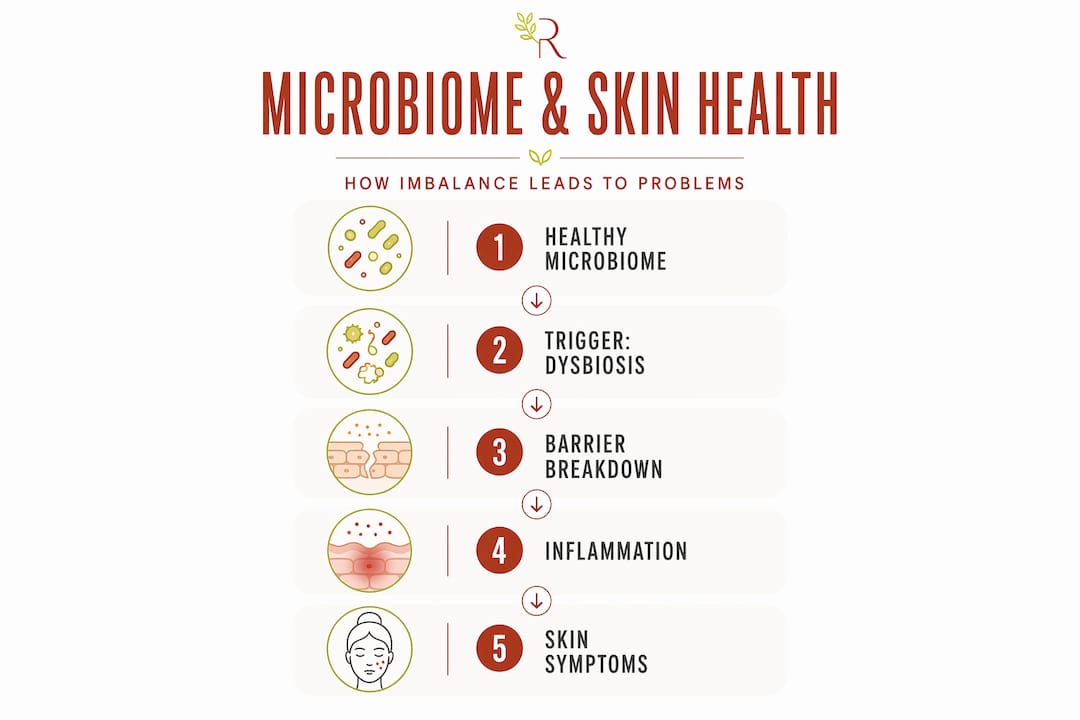
When this system breaks down, the clinical term is dysbiosis. In atopic dermatitis, Staphylococcus aureus overgrowth is a well-documented trigger. Altered skin lipids, elevated pH, and reduced antimicrobial peptides create a feedback loop where inflammation drives barrier damage, which invites more S. aureus, which drives more inflammation. Acne follows a similar pattern with Cutibacterium acnes strain imbalances. The species itself is not the villain; losing the balance between its strains is what triggers breakouts.
Pro Tip: When evaluating how bacteria affect skin health in your own case, look for patterns rather than single triggers. Skin that flares after stress, dietary changes, or antibiotic use is often signaling a microbiome disruption, not just a surface problem.
The gut-skin axis: how gut health shapes your complexion
The concept of the gut-skin axis describes the bidirectional communication network between your gastrointestinal tract and your skin. It is not metaphorical. The mechanism runs through immune cells, circulating metabolites, and neural signals that travel between these two organ systems continuously.

The most studied pathway involves short-chain fatty acids (SCFAs), particularly butyrate. When fiber-fermenting bacteria in your colon break down prebiotic fiber, they produce butyrate as a byproduct. Gut-derived butyrate promotes regulatory T cell differentiation and suppresses systemic inflammation, which directly affects how your skin responds to environmental stressors. Less systemic inflammation means calmer, clearer skin. It is one of the clearest examples of how the impact of gut health on skin is not just theoretical.
Gut dysbiosis, on the other hand, sets off a different chain of events:
- Harmful bacteria release lipopolysaccharides (LPS) into circulation, triggering low-grade systemic inflammation.
- That inflammation activates skin immune cells, worsening conditions like psoriasis and atopic dermatitis.
- A compromised gut lining (often called leaky gut) allows more of these inflammatory signals to enter the bloodstream.
- Gut microbiota metabolites engage immune pathways that alter skin barrier function, often before visible symptoms appear.
The clinical evidence for this connection is building rapidly. People with acne, psoriasis, and atopic dermatitis all show measurable shifts in gut microbial diversity compared to individuals with clear skin. Diet is the most direct lever you can pull. High-fiber, fermented-food-rich diets increase SCFA production. Ultra-processed diets, low in fiber and high in refined sugar, do the opposite, starving the gut bacteria that produce these protective metabolites. If you want to understand improving gut microbiome diversity through dietary shifts, starting with prebiotic fiber is backed by the strongest evidence.
Microbiome-targeted treatments: what actually works
The field of microbiome-targeted skin therapies has matured considerably. The older paradigm of “kill everything that moves” with broad-spectrum antibiotics is being replaced by a precision restoration model, one that supports beneficial species while selectively limiting pathogens.
Here is how the main approaches stack up:
Oral probiotics and synbiotics
- A meta-synthesis of 60 randomized controlled trials found substantial reductions in SCORAD scores (atopic dermatitis severity) and PASI scores (psoriasis severity) following probiotic and synbiotic supplementation.
- Evidence for acne and melasma is less conclusive but trending positive, particularly for reducing inflammatory lesion counts.
- Strain selection matters enormously. Different strains of the same species can have opposing effects on skin inflammation, which is why generic “probiotic” labels are not particularly informative.
Topical microbiome strategies
Topical prebiotics like acacia gum selectively promote S. epidermidis growth while suppressing S. aureus, improving barrier function and reducing inflammatory markers in both laboratory models and animal studies. This selective approach is exactly what makes prebiotics more precise than antibiotics.
| Approach | Evidence Strength | Best Use Case |
|---|---|---|
| Oral probiotics (specific strains) | Strong for AD, moderate for acne | Systemic, condition-specific support |
| Topical prebiotics | Moderate, growing evidence | Barrier repair, dysbiosis correction |
| Synbiotics (pre + probiotic combo) | Strong for AD and psoriasis | Combining gut and skin microbiome benefits |
| Broad-spectrum antibiotics | Strong short-term, risky long-term | Only justified for acute infections |
| Phage therapy | Early-stage, promising | Targeted pathogen removal without collateral damage |
Pro Tip: Skincare products labeled “probiotic” are not all equal. Some formulations include irritants or preservatives that disrupt microbiome balance even if they contain live organisms. Always check the full ingredient list, not just the front panel claim.
Skin microbiome-focused therapies increasingly measure outcomes beyond symptom checklists, incorporating barrier integrity markers and inflammatory cytokine levels. That matters because treatments that only suppress symptoms without repairing barrier function tend to produce rebound flares.
Practical microbiome skincare habits that support your skin daily
You do not need a clinical intervention to start supporting your microbiome. Most of the changes that matter most are the ones you can sustain over months and years, not weeks.
Dietary foundation:
- Eat 25 to 35 grams of prebiotic fiber daily from sources like oats, garlic, onions, chicory root, and Jerusalem artichokes. These feed the gut bacteria that produce skin-protective SCFAs.
- Add one to two servings of fermented foods daily, such as yogurt with live cultures, kefir, kimchi, or sauerkraut, to maintain microbial diversity.
- Reduce refined sugar and ultra-processed food, both of which are directly linked to gut dysbiosis and its downstream effects on skin inflammation.
Skincare routine adjustments:
- Avoid over-cleansing. Washing your face more than twice a day strips beneficial microbes along with excess sebum.
- Choose fragrance-free, pH-balanced cleansers. High-pH soaps disrupt the acid mantle that your beneficial microbes depend on.
- Consider products with documented prebiotic skin benefits rather than just general “probiotic” marketing language.
Systemic support:
- Reserve antibiotics for genuine infections. Frequent antibiotic use reshuffles your gut and skin microbiomes in ways that can take months to recover from.
- Manage stress actively. Elevated cortisol alters gut permeability and skin immune responses, making the gut-skin axis more susceptible to dysfunction. You can explore how chronic systemic inflammation compounds these effects over time.
- Prioritize sleep. Skin barrier repair and microbial rebalancing are both processes that accelerate during nighttime recovery cycles.
Pro Tip: Track your skin’s response to dietary changes over at least four weeks before drawing conclusions. Gut microbiome shifts take time to manifest on the skin surface, and short-term experiments rarely reveal the full picture.
My take on why skin care still misses the microbiome
I’ve spent years reviewing the research on skin health, and the thing that still surprises me is how many dermatology protocols treat the skin surface as though it exists in isolation. Prescribe a retinoid, add a gentle cleanser, done. The microbiome rarely comes up unless the patient already has a diagnosed condition like eczema.
In my experience, the cases where people see lasting skin improvement, not just temporary clearing, are almost always the ones where the approach includes gut health alongside topical strategy. Someone can switch to a microbiome-friendly cleanser and still struggle with persistent acne if their diet is gut-hostile. The surface is downstream of everything else.
What I’ve also learned is that personalization is not optional here. The idea that a single probiotic strain or a universal skincare routine will work for everyone ignores what the research now clearly shows: microbiome composition is highly individual. What supports one person’s skin barrier may be neutral or even counterproductive for another. The most productive thing you can do is treat your microbiome data, meaning how your skin and gut respond to changes, as your most important feedback signal.
The research is only going to get more specific from here. Phage therapy, strain-level precision probiotics, live biotherapeutic products. What I’m confident in now is that the people who embrace microbiome-friendly habits consistently, before they have a diagnosed condition, are the ones who will age with the best skin.
— Larry
Support your skin from the inside out with Tryrevivify
If you’ve made it this far, you already understand that skin health starts at the cellular and microbial level, not at the moisturizer aisle.
At Tryrevivify, we’ve built a supplement specifically designed to support your body at exactly that level. Revivify combines superoxide dismutase (SOD) with prebiotic fiber in a patented formula that fights free radicals while simultaneously feeding the beneficial bacteria your gut microbiome depends on. SOD targets oxidative stress at the cellular level. Prebiotic fiber supports the microbial diversity that drives SCFA production and systemic immune balance, both of which directly feed the gut-skin axis you’ve just read about. If you’re ready to give your microbiome the support it needs, explore the 30-day supply and see what consistent cellular and microbial support can do for your skin.
FAQ
What is the skin microbiome?
The skin microbiome is the community of trillions of bacteria, fungi, and viruses living on your skin’s surface. These microorganisms protect against pathogens, regulate immune responses, and maintain the barrier function that keeps skin healthy and hydrated.
Can the microbiome improve acne?
Yes, research shows that microbiome imbalances contribute to acne, and restoring that balance through targeted probiotics and dietary changes can reduce inflammatory lesions. Evidence is strongest for oral synbiotics, though strain selection matters significantly.
How does gut health affect skin conditions?
Gut bacteria produce short-chain fatty acids like butyrate that regulate immune cell behavior throughout the body, including in the skin. Poor gut microbiome diversity is directly associated with increased severity of acne, psoriasis, and atopic dermatitis.
Are topical probiotics effective for skin health?
Topical prebiotic and probiotic approaches show growing evidence for barrier repair and dysbiosis correction, particularly in atopic dermatitis models. However, some “probiotic” skincare products contain irritants that can undermine these benefits, so reading full ingredient labels is critical.
How long does it take for microbiome changes to improve skin?
Gut microbiome shifts typically take four to eight weeks to produce noticeable changes at the skin level, since microbial rebalancing and its downstream immune effects are gradual processes. Consistency over months, not days, is what produces lasting results.