

The Role of Cellular Health in Your Complexion
Cellular health is defined as the ability of your body’s cells to produce energy, repair damage, and renew themselves efficiently. The role of cellular health in complexion is direct: when your skin cells function well, your skin looks radiant, firm, and even-toned. When they don’t, the signs show up fast. Your body produces about 25 million new cells every second, and the quality of that renewal process determines whether your skin ages gracefully or accelerates toward dullness, sagging, and wrinkles. Processes like NAD+ metabolism, fibroblast activity, and mitochondrial function are not abstract biology. They are the engine behind every visible skin quality you care about.
How does cellular health affect skin complexion?
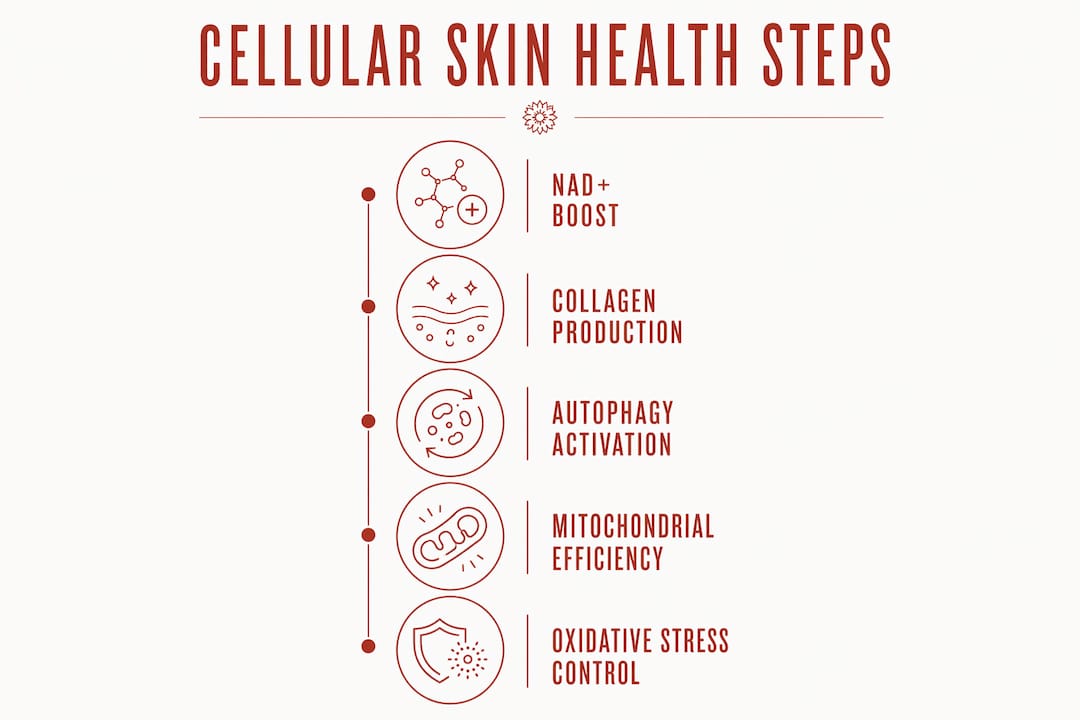
Skin complexion reflects what is happening inside your cells, not just on the surface. Three cellular mechanisms drive most of what you see in the mirror: NAD+ levels, autophagy, and mitochondrial efficiency.
NAD+ and collagen production
NAD+ (nicotinamide adenine dinucleotide) is a coenzyme your cells use for energy production and DNA repair. Fibroblasts, the cells responsible for producing collagen and elastin, depend on NAD+ to function. As NAD+ levels decline with age, fibroblast activity drops, collagen synthesis slows, and the structural scaffolding of your skin weakens. The result is visible: fine lines deepen, skin loses its bounce, and the overall tone becomes uneven.
Autophagy: your cells’ recycling system
Autophagy is the process by which cells break down and remove damaged components, essentially a built-in recycling system. The 2016 Nobel Prize in Physiology or Medicine recognized autophagy’s role in healthy aging, immune function, and metabolic balance. For skin specifically, autophagy clears out dysfunctional proteins and organelles that would otherwise accumulate and accelerate cellular aging. When autophagy slows, damaged cellular debris builds up, and skin cells lose their ability to renew cleanly.

Mitochondrial efficiency and oxidative stress
Mitochondria generate the energy your skin cells need to repair and regenerate. When mitochondrial function declines, cells produce less energy and generate more free radicals as a byproduct. This oxidative stress damages collagen fibers, disrupts the skin barrier, and accelerates the aging process. Reducing oxidative stress at the cellular level is one of the most direct ways to preserve skin quality over time.
Key cellular factors that affect skin appearance include:
- NAD+ depletion: Reduces fibroblast output and collagen synthesis, causing wrinkles and loss of firmness
- Slowed autophagy: Allows damaged proteins to accumulate, dulling skin tone and texture
- Mitochondrial dysfunction: Increases oxidative stress, breaking down collagen and weakening the skin barrier
- Reduced DNA repair capacity: Allows UV and environmental damage to compound over time
Pro Tip: If your skin looks dull despite a solid topical routine, the issue may be cellular energy production, not your cleanser or moisturizer.
What lifestyle habits improve cellular health for better skin?
Optimal cellular health requires managing interconnected processes through synergistic lifestyle actions rather than isolated supplements. The science on this is clear: no single habit does the job alone. The six pillars of lifestyle medicine, which include nutrition, exercise, stress regulation, sleep, toxin avoidance, and social connection, all influence molecular pathways like mitochondrial function and collagen breakdown.
Here are the most evidence-backed lifestyle interventions for cellular skin health:
-
Intermittent fasting: Periods without food stimulate autophagy, giving your cells time to clear out damaged components. This directly supports skin cell renewal and reduces the buildup of cellular debris that dulls complexion.
-
Aerobic exercise: Regular cardio triggers mitochondrial biogenesis, meaning your body builds new, more efficient mitochondria. More mitochondria means more cellular energy available for skin repair and collagen production.
-
Antioxidant-rich nutrition: Vitamins C and E, polyphenols, and carotenoids neutralize free radicals before they damage collagen fibers. The role of nutrition in skin health extends to the gut microbiome, which regulates inflammation that directly affects skin clarity.
-
Quality sleep: Growth hormone, released primarily during deep sleep, drives cellular repair across the body including skin. Chronic sleep deprivation measurably reduces skin barrier function and slows cell turnover.
-
Stress management: Chronic cortisol elevation degrades collagen, suppresses immune function, and accelerates mitochondrial aging. Practices like meditation and breathwork reduce cortisol and protect cellular integrity.
-
Toxin avoidance: Cigarette smoke, alcohol, and environmental pollutants introduce free radicals that overwhelm cellular antioxidant defenses. Reducing exposure gives your cells a fighting chance to maintain their repair capacity.
Synergistic combinations, such as pairing intermittent fasting with micronutrient support, enhance autophagy and DNA repair more effectively than any single approach alone.
Pro Tip: Combining aerobic exercise with a nutrient-dense diet creates a compounding effect on mitochondrial health. Neither works as well in isolation.
What are the signs of poor cellular health in your skin?
Poor cellular health shows up on your skin before it shows up anywhere else. Skin is one of the body’s most metabolically active organs, and it reflects systemic cellular function with surprising accuracy.
Common signs that cellular health is compromised include:
- Increased fine lines and wrinkles: Collagen synthesis has slowed due to NAD+ depletion or fibroblast decline
- Persistent dullness: Reduced cell turnover and autophagy leave old, damaged cells on the surface longer
- Sagging and loss of elasticity: Degraded extracellular matrix proteins, particularly collagen and elastin, can no longer support skin structure
- Uneven tone and hyperpigmentation: DNA repair failures allow UV damage to accumulate in melanocytes
- Slow wound healing: Mitochondrial dysfunction reduces the energy available for tissue repair
Senescent cells add another layer of complexity. These are cells that have stopped dividing but have not died. They contribute to tissue dysfunction through inflammatory secretions, a process researchers call the senescence-associated secretory phenotype (SASP). However, senescent cells also play a necessary role in short-term wound healing. The goal is not to eliminate them entirely but to prevent their excessive accumulation.
“Skin aging is a biologically plastic process. The molecular mechanisms driving it are modifiable through lifestyle choices, which means the skin you have today is not necessarily the skin you will have in five years. The decisions you make at the cellular level compound over time, for better or worse.”
When surface symptoms persist despite good topical care, the root cause is almost always systemic. A dermatologist or functional medicine practitioner can help identify whether mitochondrial dysfunction, chronic inflammation, or hormonal shifts are driving what you see on the surface.
How do topical treatments and systemic cellular health work together?
Topical treatments support skin health, but they cannot replace the cellular processes that generate healthy skin from within. Topical serums alone cannot fully restore healthy skin when systemic foundations are compromised. This is the core limitation of a surface-only approach.
The table below compares what topical and systemic approaches each address:
| Approach | What it addresses | What it cannot replace |
|---|---|---|
| Topical antioxidants (vitamin C, retinol) | Surface oxidative damage, melanin regulation | Mitochondrial energy production, NAD+ levels |
| Topical peptides and growth factors | Stimulate surface collagen temporarily | Fibroblast function driven by internal NAD+ |
| Oral NAD+ precursors (NMN, NR) | Restore cellular energy and DNA repair capacity | Structural skin support from topical moisturizers |
| Lifestyle interventions (diet, exercise, sleep) | Systemic mitochondrial and autophagy function | Targeted surface hydration and UV protection |
The functional medicine perspective frames skin health as a systems-level outcome. Cellular health optimization means creating an environment where cells can thrive, not just patching damage after it occurs. Restoring NAD+ pools through oral precursors supports collagen synthesis and DNA repair at a depth no topical product can reach. Pairing that with topical care that protects the surface creates a genuinely complete approach.
The microbiome’s influence on skin adds another systemic dimension. Gut bacteria regulate systemic inflammation, which directly affects how quickly skin cells age and how well they repair. Addressing cellular health at multiple levels, gut, mitochondria, NAD+, and surface barrier, produces results that no single-layer strategy can match.
Understanding herbal immune modulators is also relevant here. Certain natural compounds influence cellular signaling pathways that affect both immune function and skin cell behavior, adding another tool to a systems-level approach.
Key Takeaways
Cellular health is the primary driver of skin complexion quality, and improving it requires addressing NAD+ levels, autophagy, mitochondrial function, and lifestyle factors together rather than in isolation.
| Point | Details |
|---|---|
| NAD+ drives collagen synthesis | NAD+ decline reduces fibroblast activity, directly causing wrinkles and loss of skin firmness. |
| Autophagy clears cellular debris | Stimulating autophagy through fasting and exercise removes damaged proteins that dull skin tone. |
| Topical care has limits | Surface treatments cannot restore mitochondrial function or NAD+ levels that generate healthy skin. |
| Six lifestyle pillars matter | Nutrition, sleep, exercise, stress management, toxin avoidance, and social connection all modulate skin aging biology. |
| Senescent cells require balance | Reducing excessive senescent cell accumulation improves skin quality without eliminating their wound-healing role. |
What I’ve learned about skin aging that most people get wrong
Most people treat skin aging as a surface problem. They invest in serums, peels, and moisturizers, and then wonder why their skin still looks tired. After years of following the science on cellular aging, I’ve come to a clear conclusion: the skin is a readout of your internal biology, not an independent organ you can fix from the outside.
The misconception I see most often is the belief that a single product or nutrient will reverse years of cellular decline. It won’t. What actually works is consistent, layered effort: eating in ways that support mitochondrial function, sleeping enough for cellular repair, and reducing the oxidative load your cells have to manage every day. These are not glamorous interventions. They don’t come in a $200 bottle. But they are what the biology actually requires.
The encouraging part is that skin aging is genuinely modifiable. The molecular pathways involved respond to lifestyle inputs at any age. I’ve seen people in their 50s and 60s make meaningful improvements in skin quality simply by addressing sleep, nutrition, and oxidative stress together. The skin’s biological plasticity is real. The key is patience and consistency over the long term, not a quick fix.
— Larry
Supporting your skin from the inside out with Tryrevivify
Healthy skin starts at the cellular level, and that is exactly where Tryrevivify focuses.

Tryrevivify’s REVIVIFY® formula combines superoxide dismutase (SOD) with prebiotic fiber in a patented daily supplement designed to fight free radicals and reduce oxidation throughout the body. SOD is the body’s primary antioxidant enzyme, and supporting it directly addresses the oxidative stress that degrades collagen and accelerates cellular aging. For anyone serious about skin vitality, addressing cellular oxidation is a foundational step that topical products simply cannot replicate. Explore the REVIVIFY® 30-Day Supply and see how cellular-level support translates to visible skin results.
FAQ
What is the role of cellular health in complexion?
Cellular health determines how well skin cells produce energy, synthesize collagen, and renew themselves. When cellular processes like NAD+ metabolism and mitochondrial function decline, visible signs of aging such as wrinkles, dullness, and sagging follow.
How does NAD+ affect skin aging?
NAD+ powers fibroblast activity and DNA repair. As NAD+ levels decline with age, collagen synthesis slows and skin loses firmness and suppleness.
Can lifestyle changes actually improve skin at the cellular level?
Yes. Intermittent fasting stimulates autophagy, aerobic exercise triggers mitochondrial biogenesis, and antioxidant-rich nutrition reduces oxidative damage. These changes directly improve the cellular processes that determine skin quality.
Why don’t topical treatments alone fix aging skin?
Topical products address surface symptoms but cannot restore mitochondrial energy production or NAD+ levels. Dermatologists confirm that systemic cellular function, including barrier integrity and energy production, must be supported internally for lasting skin improvement.
What are senescent cells and why do they matter for skin?
Senescent cells are cells that have stopped dividing but remain metabolically active, releasing inflammatory signals that degrade surrounding tissue. Their accumulation accelerates skin aging, though they also play a necessary role in wound healing, so balance matters more than elimination.