

Your Cellular Renewal Skin Health Checklist for 2026
Your highest-leverage cellular renewal skin health checklist, in one place: apply broad-spectrum SPF 30+ every morning, layer a vitamin C serum underneath it, use a retinoid or adapalene at night, exfoliate gently twice a week, support your barrier with ceramides and hyaluronic acid, sleep consistently, move your body daily, and see a dermatologist if texture or pigment changes persist beyond three months.
- ☑ Apply a broad-spectrum sunscreen every morning (last step, after moisturizer)
- ☑ Use a vitamin C or antioxidant serum in the AM to neutralize free radicals
- ☑ Apply a retinoid, retinal, or adapalene at night, 2–3 nights per week to start
- ☑ Exfoliate with a glycolic acid or salicylic acid product once or twice per week
- ☑ Moisturize with ceramides and hyaluronic acid morning and night
- ☑ Get sufficient sleep on a consistent schedule
- ☑ Exercise regularly each week (include resistance training)
- ☑ Eat protein, omega-3s, and polyphenol-rich foods; limit ultra-processed foods
- ☑ See a dermatologist if OTC actives cause persistent irritation or if you notice rapidly changing lesions
Pro Tip: Start with one active at a time. Adding retinoids, AHAs, and vitamin C simultaneously is the fastest route to a compromised barrier and a stalled routine. Give each new ingredient two full weeks before layering another.
Key Takeaways
Daily SPF, a nightly retinoid, and consistent sleep form the highest-return foundation of any cellular renewal routine, and no other intervention compensates when these three are missing.
| Point | Details |
|---|---|
| SPF is non-negotiable | Apply broad-spectrum SPF 30+ every morning; UV damage directly slows cellular turnover. |
| Retinoids drive renewal | Start with adapalene 2–3 nights per week and build slowly; tretinoin requires a prescription but has the strongest evidence. |
| Exfoliate, do not strip | Use AHAs or BHAs 1–2 times per week maximum; over-exfoliation stalls renewal by inflaming the barrier. |
| Lifestyle is the foundation | Consistent sleep, protein-rich diet, and regular exercise support the mitochondrial function skin renewal depends on. |
| Tryrevivify supports cellular defense | The SOD-based daily supplement addresses free radical activity systemically, complementing topical antioxidants in your routine. |
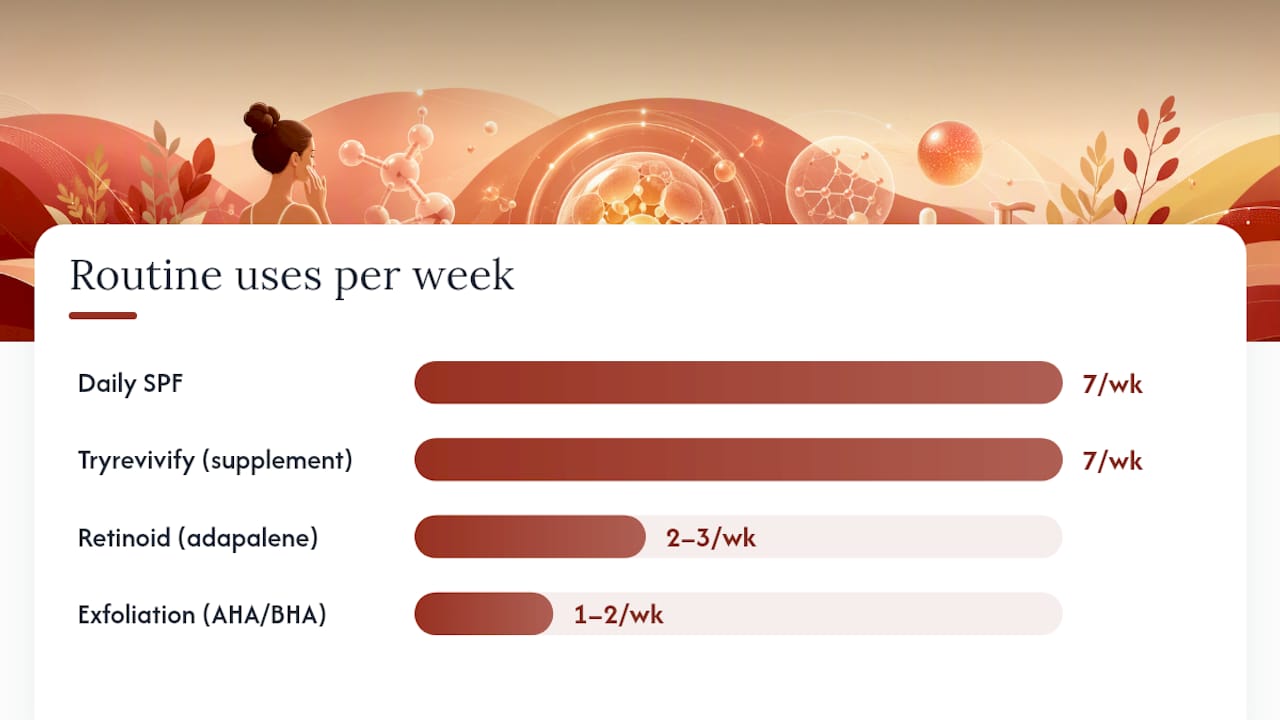
Table of Contents
- What does cellular renewal actually mean for your skin?
- Why does renewal slow with age, and what does it look like?
- Your morning routine checklist to protect cellular renewal
- Your evening routine checklist to support repair and renewal
- Weekly and monthly checklist for exfoliation and professional treatments
- Which ingredients actually support cellular renewal, and who should use them?
- Lifestyle habits that support cellular and mitochondrial health
- When should you see a dermatologist?
- How long before you see real changes?
- Supplements and oral cellular support: what the evidence actually says
- What I would actually prioritize if your time is limited
- Tryrevivify and targeted cellular support: what to know
- Sources
What does cellular renewal actually mean for your skin?
Skin cell turnover is the process by which your body continuously generates new keratinocytes in the deepest layer of the epidermis, pushes them toward the surface, and sheds the oldest, flattened cells at the top. Think of it as a slow escalator: new cells form at the base, ride upward over several weeks, and eventually slough off. According to ISDIN, this cycle runs roughly 28 days in young adults and slows considerably with age, which is why a teenager’s skin bounces back from a blemish in days while the same blemish can leave a mark for months in someone over 40.
Why does this matter for your routine? Products work best on fresh, well-functioning skin. When dead cells accumulate because turnover has slowed, they form a physical barrier that:
- Scatters light unevenly, producing dullness
- Traps sebum and debris, enlarging the appearance of pores
- Blocks active ingredients from reaching the living cells that need them
- Slows the fading of post-inflammatory hyperpigmentation
Supporting turnover is not about forcing your skin to shed faster at any cost. It is about removing the friction that accumulates when the natural process stalls.
Why does renewal slow with age, and what does it look like?
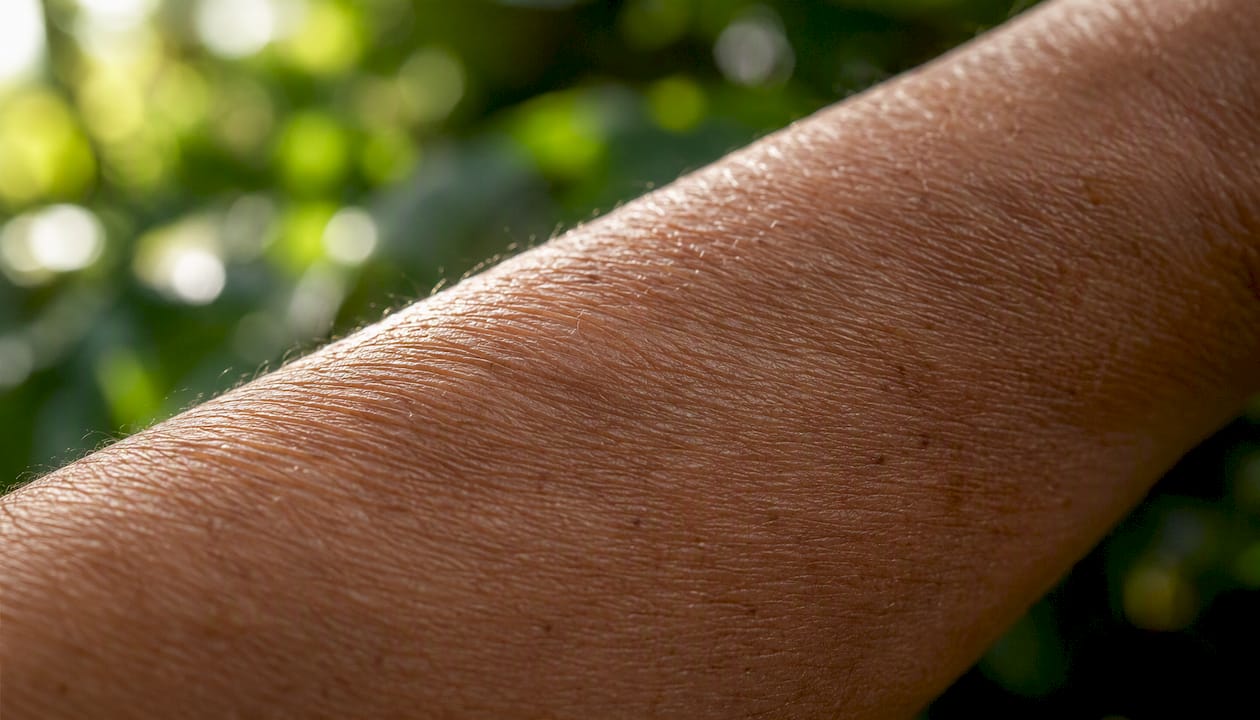
Several forces converge to slow the escalator. UV exposure is the most damaging: it directly injures keratinocyte DNA, triggers chronic low-grade inflammation, and degrades the extracellular matrix that supports orderly cell migration. Chronic stress elevates cortisol, which suppresses repair signaling. Poor sleep cuts into the overnight window when growth hormone and cellular repair peak. Smoking introduces a flood of free radicals that overwhelm the skin’s antioxidant defenses, and air pollution compounds this by depositing reactive particles that drive oxidative stress and inflammation at the surface.
The visible result is a cluster of changes that tend to appear together:
- Persistent dullness that does not resolve after a good night’s sleep
- Rough or uneven texture you can feel when running a finger across the cheek
- Uneven tone and hyperpigmentation that lingers after blemishes or sun exposure
- Enlarged-looking pores, especially across the nose and chin
- Slower scar fading after cuts, breakouts, or procedures
- Fine lines that deepen faster than expected for your age
Use this list as a self-assessment. If you check three or more items, your skin is signaling that turnover support should be a priority, not an afterthought.
Your morning routine checklist to protect cellular renewal
The AM routine has one job: protect the renewal capacity you built overnight; to do this, consider how to build a natural skincare routine for healthy skin that supports your skin’s barrier and renewal. Cleveland Clinic dermatologists recommend a simple, layered approach: gentle cleanser, antioxidant serum, moisturizer, and sunscreen. That sequence is not arbitrary; each step sets up the next.
- Gentle cleanser (optional in the AM) — if skin is not visibly oily or dirty, water alone may suffice. — If your skin is not visibly oily or dirty from overnight products, a splash of water is enough. Over-cleansing strips the acid mantle and triggers compensatory oil production.
- Vitamin C serum (L-ascorbic acid, at typical effective concentrations) — Apply to slightly damp skin. Vitamin C neutralizes UV-generated free radicals before they damage DNA, and it supports collagen synthesis in the dermis. Stabilized formulas in opaque or airless packaging hold potency longer.
- Moisturizer with ceramides and hyaluronic acid — Ceramides reinforce the lipid barrier; hyaluronic acid draws water into the stratum corneum. Together they keep the environment hospitable for active cell migration.
- Broad-spectrum sunscreen (last step, every day) — Sunscreen is the single most important daily habit for preserving cellular renewal capacity. UV radiation directly damages keratinocyte DNA and slows turnover; no retinoid or exfoliant can outpace daily unprotected sun exposure.
Pro Tip: Mineral SPF (zinc oxide or titanium dioxide) sits on top of skin and is less likely to interact with your vitamin C underneath. Chemical SPF absorbs UV but needs 15–20 minutes to activate after application. Either works; pick the texture you will actually wear every day.
Your evening routine checklist to support repair and renewal
The PM routine flips the priority from protection to repair. Cells divide most actively at night, and the skin’s barrier is more permeable in the evening, which means actives penetrate more effectively.
Sequence:
- Oil cleanser or micellar water to remove SPF and makeup
- Gentle foaming or gel cleanser (double-cleanse if you wore heavy SPF or makeup)
- Optional hydrating toner or essence
- Treatment active (retinoid, adapalene, or chemical exfoliant — not both on the same night)
- Moisturizer with ceramides or hyaluronic acid to seal and support the barrier
Frequency guide for PM actives:
- Pause retinoids if you experience peeling, burning, or visible dermatitis. Resume at a lower frequency once the barrier recovers.
- Never use a retinoid the same night as a strong AHA or BHA. The combined pH shift and cell-turnover acceleration overwhelms the barrier.
- Pregnant or nursing? Avoid retinoids entirely and consult your OB before using any active.
Pro Tip: The “sandwich method” works well for retinoid beginners: apply moisturizer, wait five minutes, apply retinoid, wait five minutes, apply another thin layer of moisturizer. This buffers irritation without meaningfully reducing efficacy.
Weekly and monthly checklist for exfoliation and professional treatments
Physical scrubs with coarse particles are largely out of favor among dermatologists because they create micro-tears that compromise the barrier. Chemical exfoliants are more precise and more controllable.
Weekly schedule by skin type:
- Oily or acne-prone: 2–3 times per week with salicylic acid (BHA, 0.5–2%) or a low-percentage glycolic acid toner
- Normal or combination: 1–2 times per week with glycolic acid (5–10%) or lactic acid
- Dry or sensitive: Once per week maximum; consider mandelic acid or polyhydroxy acids (PHAs), which exfoliate more gently
- Rosacea-prone: Avoid AHAs; use only PHAs or enzyme exfoliants (papain, bromelain) with dermatologist guidance
Enzyme masks once a week can add a light exfoliation layer without the pH disruption of acids. Do not stack an enzyme mask on a night you have already used a chemical exfoliant.
Professional treatments (monthly or quarterly):
- Chemical peels (superficial to medium-depth): Glycolic, salicylic, or TCA peels remove accumulated dead cells in a single session and stimulate collagen remodeling. Downtime ranges from none (superficial) to 5–7 days (medium-depth).
- Microneedling: Creates controlled micro-injuries that trigger a repair cascade and boost collagen and elastin. Typically 3–6 sessions spaced 4–6 weeks apart.
- Fractional laser resurfacing: Targets both surface texture and deeper collagen. Longer downtime (7–14 days for ablative), but more dramatic results per session.
After any professional treatment: avoid retinoids and exfoliants until the skin has fully healed, wear SPF diligently, and follow your provider’s aftercare protocol exactly.
Which ingredients actually support cellular renewal, and who should use them?
Retinoids and chemical exfoliants are among the most evidence-backed topical actives for accelerating surface cell turnover and improving texture. Here is how the full roster breaks down:
- Tretinoin (prescription retinoid): Binds retinoic acid receptors directly, stimulating keratinocyte turnover and collagen synthesis. The gold standard, but requires a prescription and carries the highest irritation risk.
- Adapalene (OTC retinoid): Slightly less irritating than tretinoin; strong evidence for acne and texture. A good starting point for retinoid newcomers.
- Retinol / retinal (OTC): Converted to retinoic acid in the skin. Retinal converts in one step (faster than retinol’s two-step conversion), so it tends to be more effective at lower concentrations.
- Glycolic acid (AHA): Water-soluble; dissolves the bonds between dead surface cells. Works well for dullness, uneven tone, and fine lines. Increases UV sensitivity, so morning SPF is non-negotiable.
- Salicylic acid (BHA): Oil-soluble; penetrates into pores to clear sebum and dead cells. Preferred for oily, acne-prone, or congested skin.
- Vitamin C (L-ascorbic acid): Antioxidant that neutralizes free radicals and supports collagen synthesis. Pairs well with vitamin E and ferulic acid for enhanced stability and efficacy.
- Niacinamide (vitamin B3): Strengthens the barrier, reduces transepidermal water loss, and brightens uneven tone by interrupting melanin transfer. One of the most versatile and well-tolerated actives across skin types.
- Hyaluronic acid: Draws water into the stratum corneum. Does not accelerate turnover directly, but a well-hydrated skin environment supports healthy cell migration.
- Ceramides: Lipid molecules that form the “mortar” between skin cells. Depleted by harsh cleansers, over-exfoliation, and aging; replenishing them is central to barrier repair.
- Broad-spectrum sunscreen: Protects keratinocyte DNA from UV damage. Without it, every other active you apply is fighting an uphill battle. Free radical damage from UV exposure accelerates premature aging at the cellular level.
Pairing guidance:
- ✓ Vitamin C + vitamin E + ferulic acid (morning)
- ✓ Retinoid + ceramide moisturizer (evening)
- ✓ Niacinamide + hyaluronic acid (any time)
- ✗ Retinoid + AHA/BHA (same evening — too much barrier disruption)
- ✗ Vitamin C + retinoid (different pH ranges; use C in AM, retinoid at PM)
Pro Tip: If you are on oral medications (isotretinoin, certain antibiotics, or immunosuppressants) or are pregnant, consult your dermatologist before adding any retinoid or strong acid to your routine. The interactions are real and the stakes are higher than a little dryness.
Lifestyle habits that support cellular and mitochondrial health

Topical routines address the surface. What you eat, how you sleep, and how you move determine the cellular environment those topicals are working within. Lifestyle factors including nutrition, physical activity, and sleep timing influence mitochondrial function and overall cellular health, and the skin reflects that biology directly.
Diet:
- Prioritize protein at every meal (collagen synthesis requires adequate amino acids, particularly glycine and proline)
- Eat polyphenol-rich foods: berries, green tea, dark chocolate, and olive oil supply antioxidants that reduce oxidative damage to skin cells
- Include omega-3 fatty acids (fatty fish, walnuts, flaxseed) to support the lipid barrier and reduce systemic inflammation
- Limit ultra-processed foods; their high glycemic load drives insulin spikes that promote inflammation and accelerate collagen breakdown
Exercise:
Regular movement, particularly a combination of zone 2 cardio and resistance training, increases mitochondrial number and efficiency. Better mitochondrial function means more energy available for cellular repair. Exercise also improves circulation, delivering oxygen and nutrients to skin cells more effectively.
Sleep and circadian rhythm:
- Keep a consistent sleep and wake time, even on weekends
- Get morning light exposure within 30–60 minutes of waking to anchor your circadian clock
- Avoid eating within 2–3 hours of bedtime; late-night eating disrupts the metabolic rhythm that governs cellular repair
Research on autophagy shows that cellular cleanup pathways are stimulated by controlled fasting and exercise, both of which align with a circadian-respecting lifestyle. Quality sleep and consistent meal timing have outsized effects on cellular repair compared with most single supplements.
When should you see a dermatologist?
OTC actives are powerful, but they have limits. See a board-certified dermatologist if you notice:
- Texture changes that do not improve after 12 weeks of a consistent routine
- Sudden or rapidly changing pigmentation, especially asymmetric spots
- A lesion that bleeds, itches persistently, or changes shape over weeks
- Severe redness, peeling, or burning that does not resolve within 48 hours of pausing actives
- Signs of oxidative stress-related skin changes that feel systemic rather than topical
Questions to bring to your appointment:
- “Am I a candidate for prescription tretinoin?”
- “Would a chemical peel or microneedling accelerate my results?”
- “Are my current actives interacting with any medications I take?”
Pro Tip: Bring your current product lineup to the appointment. Dermatologists can spot ingredient conflicts in seconds that would take you weeks of trial and error to identify on your own.
Professional treatments worth discussing: superficial to medium-depth chemical peels (fastest for surface texture), microneedling (3–6 sessions for collagen remodeling), and fractional laser resurfacing (most significant results, longest downtime). All require sun avoidance and barrier support during recovery.
How long before you see real changes?
Realistic timelines matter because most people abandon a routine right before it starts working.
| Timeframe | What you can expect |
|---|---|
| 2–4 weeks | Improved surface hydration; skin feels less tight or rough |
| 4–8 weeks | Visible texture improvement; pores appear smaller; tone more even |
| 8–12 weeks | Early pigmentation fading; fine lines soften with retinoid use |
| 3–6 months | Collagen-driven changes become visible; significant tone correction |
| 6–12 months | Full benefit of prescription retinoids and professional treatments |
Progress milestones to track:
- Take a photo in the same lighting every four weeks
- Note changes in how your skin feels (rough vs. smooth) before judging appearance
- Track how quickly blemishes fade compared with your baseline
- Expect a brief “purging” phase (2–6 weeks) when starting retinoids; this is normal and not a reason to stop
Age, baseline skin condition, and treatment intensity all shift these windows. Someone in their 50s starting tretinoin for the first time may need six months to see the texture changes a 30-year-old notices at eight weeks.
Supplements and oral cellular support: what the evidence actually says
Topical routines and lifestyle habits form the foundation. Oral supplements are an adjunct, not a replacement, and the evidence varies considerably by ingredient.
What has suggestive support:
- Antioxidant-rich dietary patterns (Mediterranean-style eating) consistently associate with better skin aging outcomes in observational data
- Collagen peptides show modest evidence for improving skin hydration and elasticity in small trials
- NAD+ precursors (NMN, NR) are being studied for mitochondrial support and cellular energy; early human data is promising but not yet conclusive
- Omega-3 supplementation has reasonable evidence for reducing systemic inflammation, which benefits skin indirectly
How to evaluate any supplement:
- ☑ Ingredient list is fully disclosed (no “proprietary blend” hiding doses)
- ☑ Clinical studies cited are human trials, not only animal or in-vitro data
- ☑ Third-party tested (NSF, USP, or Informed Sport certification)
- ☑ Dose matches what was studied, not a fraction of it
- ☑ Known interactions and contraindications are disclosed
- ☑ No health claims that exceed what the evidence supports
Pro Tip: Prioritize sleep quality and dietary protein before adding any supplement. No pill compensates for chronic sleep deprivation or a protein-deficient diet when it comes to cellular repair. Supplements work best on top of a solid foundation, not instead of one.
For a deeper look at how supplements can support skin cell repair at the cellular level, the Tryrevivify blog covers the mechanisms in detail.
What I would actually prioritize if your time is limited
The honest truth about skin renewal routines is that most people overcomplicate them and then quit. After reviewing the evidence, three actions account for the majority of the benefit: daily SPF, a nightly retinoid (or adapalene if you are starting out), and consistent sleep on a fixed schedule. Everything else, the vitamin C serums, the enzyme masks, the microneedling sessions, amplifies results that those three habits have already set in motion.
If you are building from scratch, do it in two-week blocks. Week one: add SPF every morning without fail. Week three: introduce adapalene two nights per week. Week five: layer in a vitamin C serum in the AM. This pace is slower than most routines suggest, but it is the pace at which your barrier can adapt without triggering the inflammation that sends people back to square one.
One more thing worth saying plainly: prescription tretinoin, when tolerated, outperforms every OTC retinoid on the market. If you have been using retinol for six months without meaningful texture improvement, that conversation with a dermatologist is worth having. The evidence behind tretinoin spans decades; the hesitation to ask for it is usually the only thing standing between you and better results.
Tryrevivify and targeted cellular support: what to know
If you want to address cellular health from the inside out, Tryrevivify offers a daily supplement formulated specifically for cellular-level support. The gel formula combines superoxide dismutase (SOD), prebiotic fiber, polyphenols, and lactobacillus to reduce free radical activity and oxidative stress throughout the body, including at the skin level. It is plant-based, third-party tested, and available with a risk-free guarantee.
SOD is the body’s primary enzymatic defense against superoxide radicals, the same free radicals that UV exposure and pollution generate at the skin surface. Supporting that defense systemically complements the topical antioxidants (vitamin C, vitamin E) in your skincare routine rather than duplicating them. Think of topical antioxidants as the first line of defense at the surface, and systemic SOD support as reinforcing the cellular environment underneath.
Tryrevivify is an optional adjunct to the topical and lifestyle measures in this checklist. It does not replace sunscreen, retinoids, or dermatologic care. To review the full ingredient list, dosing, and third-party testing documentation, visit the Tryrevivify product page and consult your healthcare provider before adding any supplement if you have an existing medical condition or take prescription medications.
Sources
The following sources informed this article and are worth bookmarking for deeper reading:
- PMC2861991 — Autophagy review (NCBI/PubMed Central)
- What products do I actually need for a simple everyday skin care routine — Cleveland Clinic
- Skin turnover: what it is and how to support it — ISDIN
- Skin regeneration: the science and how to boost it — Healthline
For personalized clinical advice, including prescription actives and professional treatments, consult a board-certified dermatologist. General information in this article does not substitute for professional medical guidance tailored to your skin condition and health history.
This article is general information, not a substitute for advice from a qualified doctor. Consult a qualified healthcare professional about your own circumstances before acting on anything here.