

What Triggers Chronic Inflammation in Your Body
Chronic inflammation is defined as a persistent, low-grade immune system activation that continues for months or years, silently damaging tissues and raising the risk of heart disease, type 2 diabetes, and cancer. Unlike acute inflammation, which resolves within hours or days after an injury or infection, chronic inflammation persists because the immune system never receives the signal to stand down. What triggers chronic inflammation in the body is not a single cause but a combination of lifestyle choices, environmental exposures, and biological conditions. Understanding these triggers is the first step toward doing something about them.
What are the primary lifestyle triggers of chronic inflammation?
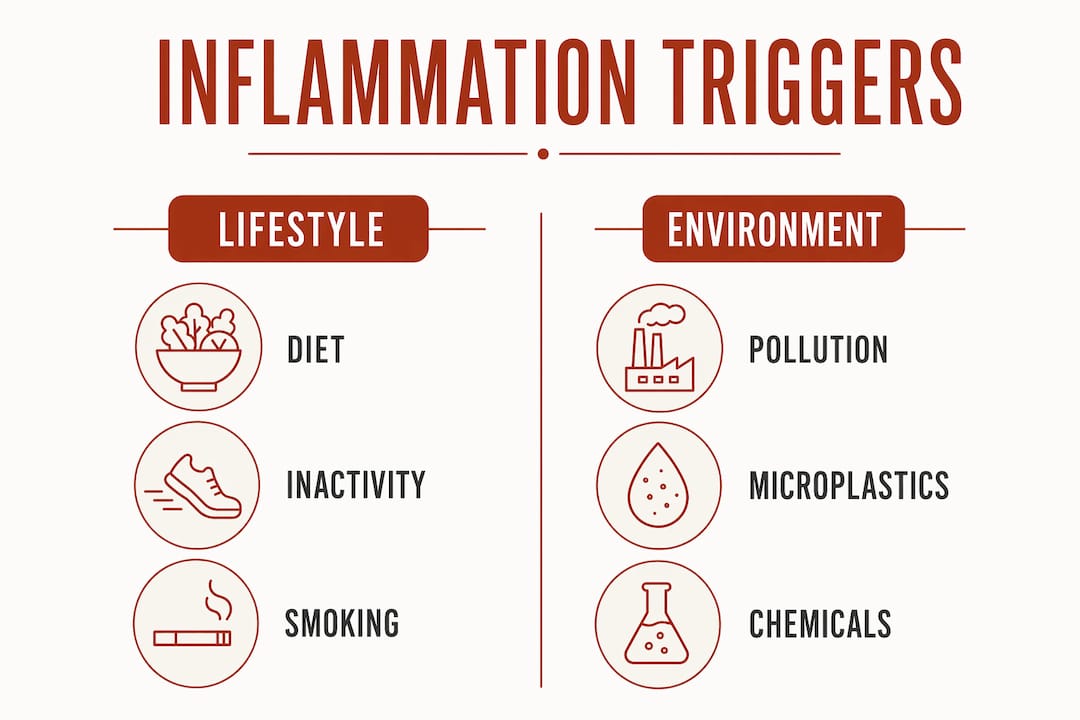
Diet is one of the most direct and modifiable drivers of persistent immune activation. Ultra-processed foods damage the gut lining, alter gut bacteria, and activate inflammatory genes, which creates a cycle of immune stimulation that never fully resolves. Refined carbohydrates and added sugars follow the same pattern, spiking blood glucose and triggering cytokine release. The connection between what you eat and how your immune system behaves is not theoretical. It is biochemical and measurable.
Sedentary behavior compounds the problem significantly. Excess body fat actively produces inflammatory molecules called adipokines, meaning obesity is not just a consequence of inflammation but also a cause. Physical inactivity reduces the body’s ability to clear these signaling molecules, keeping immune activation elevated. Even moderate daily movement, such as 30 minutes of walking, measurably lowers circulating inflammatory markers.

Tobacco smoke, alcohol, chronic stress, and poor sleep complete the lifestyle picture. Chronically elevated cortisol from long-term stress disrupts immune regulation, paradoxically increasing inflammation rather than suppressing it. Poor sleep, including undiagnosed sleep apnea, sustains this immune dysregulation overnight, giving the body no recovery window.
The main lifestyle triggers of chronic inflammation include:
- Diets high in ultra-processed foods, refined grains, and added sugars
- Physical inactivity and obesity
- Tobacco use and heavy alcohol consumption
- Chronic psychological stress
- Poor sleep quality and untreated sleep apnea
Pro Tip: Switching to a Mediterranean-style eating pattern, rich in vegetables, legumes, whole grains, and olive oil, addresses multiple lifestyle triggers simultaneously. Dr. Frank Hu at Harvard emphasizes overall dietary patterns over individual superfoods as the most effective approach.
How do environmental factors contribute to chronic inflammation?
Environmental exposures act as persistent irritants that the immune system cannot neutralize or eliminate. Air pollution, heavy metals like lead and mercury, and chemical toxins from industrial and household sources all trigger systemic inflammation by activating immune defenses that were designed for short-term threats. Because these exposures are ongoing rather than episodic, the immune response never fully resolves.
Microplastics represent one of the most concerning recent discoveries in this area. Common household plastics contribute to systemic immune activation by acting as low-level chemical stressors that the body cannot break down or excrete efficiently. Microplastic particles have been detected in human blood, lung tissue, and even the placenta, which means exposure is not avoidable through simple behavioral changes alone. The immune system treats these particles as foreign threats, maintaining a prolonged activation state that hinders resolution of inflammation.
The table below summarizes the most common environmental triggers and their primary sources.
| Environmental trigger | Primary sources |
|---|---|
| Air pollution (particulate matter) | Vehicle exhaust, industrial emissions, wildfire smoke |
| Heavy metals | Contaminated water, old paint, certain fish, industrial sites |
| Chemical toxins (pesticides, solvents) | Agricultural runoff, cleaning products, building materials |
| Microplastics | Food packaging, bottled water, synthetic textiles, cookware |
| Mold and biological contaminants | Damp buildings, HVAC systems, flood-damaged structures |
Reducing environmental exposure requires deliberate choices. Using glass or stainless steel containers instead of plastic, filtering tap water, and improving indoor air quality with HEPA filtration are practical steps that lower the daily chemical burden on your immune system. The oxidative stress connection between environmental pollutants and cellular damage is well-documented and explains why these exposures translate directly into measurable inflammation.
What biological and medical conditions cause chronic inflammation?
Internal biological conditions are often the most overlooked causes of chronic inflammation, precisely because they operate silently. Autoimmune diseases are the clearest example. In conditions like rheumatoid arthritis, lupus, and vasculitis, the immune system attacks healthy tissue, treating the body’s own cells as foreign invaders. This produces continuous inflammatory signaling that damages joints, organs, and blood vessels over time.
Chronic infections that go untreated or incompletely resolved also sustain immune activation. Viruses like Epstein-Barr and bacteria associated with Helicobacter pylori create persistent antigenic stimulation, keeping the immune system in a state of alert. The body’s attempt to contain these pathogens produces collateral inflammatory damage to surrounding tissue.
Periodontal disease is one of the most underappreciated biological triggers. Untreated gum disease continuously releases bacteria and inflammatory molecules into the bloodstream, sustaining systemic immune activation that affects the heart, joints, and metabolic function. Most people do not connect a dental problem to body-wide inflammation, yet the research is clear.
The comparison below illustrates how acute and chronic immune activation differ in these biological contexts:
| Feature | Acute immune activation | Chronic immune activation |
|---|---|---|
| Duration | Hours to days | Months to years |
| Trigger | Infection, injury | Autoimmune disease, persistent infection, oral bacteria |
| Resolution | Complete, tissue heals | Incomplete, ongoing tissue damage |
| Systemic effect | Localized, controlled | Widespread, contributes to disease risk |
Key biological and medical causes of chronic inflammation include:
- Autoimmune diseases (rheumatoid arthritis, lupus, inflammatory bowel disease)
- Chronic untreated infections (viral, bacterial, parasitic)
- Untreated periodontal disease
- Excess visceral fat producing inflammatory adipokines
- Metabolic syndrome and insulin resistance
How to identify chronic inflammation triggers and reduce their impact
Recognizing the symptoms of chronic inflammation is the starting point for managing it. Unlike acute inflammation, which produces obvious redness and swelling, chronic inflammation often presents as fatigue that does not improve with rest, persistent joint or muscle aches, brain fog, digestive irregularities, and frequent infections. These signs are easy to attribute to other causes, which is why chronic inflammation often goes unaddressed for years.
Once you recognize the pattern, reducing inflammation requires a structured approach across multiple areas of life. The following steps address the most impactful triggers:
- Shift your diet toward anti-inflammatory patterns. Replace ultra-processed foods with whole grains, legumes, fatty fish, and a wide variety of vegetables. Consistent healthy eating rich in fiber and plant diversity is more effective than any single superfood or supplement.
- Increase physical activity gradually. Aim for at least 150 minutes of moderate aerobic activity per week. Resistance training twice weekly further reduces visceral fat and its associated inflammatory signaling.
- Manage stress with proven techniques. Mindfulness-based stress reduction, yoga, and consistent social connection all lower cortisol levels. Even 10 minutes of daily breathwork produces measurable reductions in inflammatory markers.
- Prioritize sleep quality. Seven to nine hours of uninterrupted sleep allows the immune system to regulate cytokine production. If you snore heavily or wake unrefreshed, get screened for sleep apnea. It is a direct driver of sustained inflammation.
- Reduce environmental irritant exposure. Switch to glass food storage, use a water filter certified for heavy metals, and run a HEPA air purifier in your bedroom. These changes reduce the daily chemical load on your immune system.
- Address gut and metabolic health. Prebiotic fiber feeds beneficial gut bacteria, which produce short-chain fatty acids that actively suppress inflammatory gene expression. This is a mechanism, not a marketing claim.
Pro Tip: Schedule a dental cleaning every six months and treat any gum disease promptly. Periodontal bacteria entering the bloodstream is a direct, correctable source of systemic inflammation that most people never consider.
Chronic inflammation is a modifiable risk factor, not an inevitable consequence of aging. The research is consistent: lifestyle and environment changes regulate immune cytokines and prevent chronic disease progression. Pairing these changes with targeted cellular support, including antioxidant defense at the cellular level, addresses the underlying oxidative damage that sustains inflammatory cycles. You can also explore chronic systemic inflammation in more depth to understand how these triggers interact at a systems level.
Key takeaways
Chronic inflammation is not a single-cause condition. It is the cumulative result of diet, inactivity, environmental toxins, biological dysfunction, and unmanaged stress acting together on the immune system.
| Point | Details |
|---|---|
| Lifestyle is the top trigger | Diet, inactivity, tobacco, alcohol, and poor sleep are the most modifiable causes of chronic inflammation. |
| Environment matters more than expected | Air pollution, heavy metals, and microplastics act as persistent immune irritants that sustain low-grade inflammation. |
| Biological causes operate silently | Autoimmune diseases, chronic infections, and untreated gum disease fuel systemic inflammation without obvious symptoms. |
| Symptoms are easy to miss | Fatigue, brain fog, and joint aches are common signs of chronic inflammation that are often attributed to other causes. |
| Inflammation is reversible | Consistent dietary changes, physical activity, stress management, and cellular antioxidant support can measurably reduce chronic inflammation. |
Why I stopped thinking of inflammation as something that just “happens”
For years, I treated chronic inflammation as a background condition, something that accumulated quietly and was mostly beyond individual control. What changed my thinking was looking at the cumulative picture. No single trigger explains most cases of chronic inflammation. It is almost always the overlap of a pro-inflammatory diet, inadequate sleep, unmanaged stress, and one or two biological factors that nobody has addressed, like gum disease or a low-grade infection that was never fully cleared.
The part that surprises most people is how much the environment contributes. Microplastics, air quality, and chemical exposures are not fringe concerns. They are documented immune irritants that most people have no practical framework for reducing. Once you understand that your cookware, water supply, and indoor air are all potential inputs to your immune system’s activation state, the approach to managing inflammation becomes much broader than diet alone.
I also think the medical system underserves people here by focusing on treating inflammatory diseases rather than identifying and removing the triggers that sustain them. Sleep apnea is a perfect example. It is a direct driver of chronic immune dysregulation, it is diagnosable and treatable, and it is routinely missed because patients and clinicians are not connecting the dots between sleep quality and systemic inflammation.
The most honest thing I can say is this: chronic inflammation is not inevitable, but reducing it requires more consistency than most quick-fix approaches acknowledge. Small, sustained changes across diet, movement, sleep, and environment compound over time in ways that single interventions simply cannot match.
— Larry
Support your body’s inflammation response at the cellular level

Lifestyle changes address the triggers of chronic inflammation from the outside. Tryrevivify works from the inside, at the cellular level where inflammatory damage actually begins. Tryrevivify’s patented formula combines superoxide dismutase, the body’s primary antioxidant enzyme, with prebiotic fiber to fight free radicals, reduce oxidative stress, and support the gut environment that regulates immune signaling. It is designed to complement the dietary and lifestyle strategies described in this article, not replace them. If you are serious about managing your body’s inflammatory response, cellular support is a logical next step. Explore the Tryrevivify 30-Day Supply and see how it fits into your health routine.
FAQ
What triggers chronic inflammation in the body?
Chronic inflammation is triggered by a combination of lifestyle factors (poor diet, inactivity, tobacco, alcohol, poor sleep), environmental exposures (air pollution, heavy metals, microplastics), and biological conditions (autoimmune diseases, chronic infections, untreated gum disease). No single trigger is responsible in most cases. The immune system remains persistently activated when multiple triggers operate simultaneously.
What are the early symptoms of chronic inflammation?
Common symptoms include persistent fatigue, joint or muscle aches, brain fog, frequent infections, and digestive irregularities. These signs are subtle and often attributed to stress or aging, which is why chronic inflammation frequently goes undetected for years.
Can diet alone reduce chronic inflammation?
Diet is one of the most powerful tools for reducing inflammation, but it works best as part of a broader approach. Consistent eating patterns rich in fiber, plant diversity, and minimal ultra-processed foods produce the strongest results, according to nutrition experts at Harvard Health. Combining dietary changes with physical activity, stress management, and sleep improvement amplifies the effect.
How does stress cause chronic inflammation?
Chronic stress elevates cortisol levels over time, which disrupts immune regulation and paradoxically increases inflammatory cytokine production. Sleep deprivation and untreated sleep apnea produce the same effect by denying the immune system its overnight recovery window.
Is chronic inflammation reversible?
Chronic inflammation is a modifiable risk factor, not a permanent condition. Research confirms that consistent lifestyle changes including diet, exercise, stress reduction, and toxin avoidance can measurably lower inflammatory markers and reduce the risk of inflammation-driven diseases like heart disease and type 2 diabetes.