

How Oxidative Stress Triggers Breakouts: The Science
Oxidative stress is defined as a cellular imbalance in which reactive oxygen species (ROS) overwhelm the body’s antioxidant defenses, and this imbalance directly causes skin breakouts. When ROS accumulate in skin tissue, they oxidize sebum lipids, activate inflammatory cytokines, and disrupt the follicular environment in ways that produce acne lesions. The bacterium Cutibacterium acnes plays a central role here: its porphyrin metabolites act as photosensitizers, generating ROS when exposed to UV light and triggering a cascade that releases pro-inflammatory signals like interleukin-8 (IL-8). Understanding how oxidative stress triggers breakouts means understanding this chain reaction at the cellular level.
How oxidative stress triggers breakouts at the biochemical level
The connection between oxidative stress and acne formation follows a specific molecular sequence. Think of it as a relay race where each runner passes a progressively more damaging baton to the next.
-
Cutibacterium acnes porphyrins generate ROS. The bacteria living in your follicles produce porphyrin compounds that become photosensitizers under UV and visible light exposure. These compounds catalyze ROS production inside follicular keratinocytes, the skin cells lining your pores. This is why sun exposure does not always clear acne and can actually worsen it in certain individuals.
-
Squalene oxidation creates comedogenic peroxides. Sebum contains squalene, a natural skin lipid. When ROS attack squalene, they convert it into comedogenic peroxides, compounds that physically block pores and trigger localized inflammation. This chemical transformation happens before a visible pimple ever forms.
-
Pro-inflammatory cytokines amplify the response. Oxidative stress is upstream of cytokine release, meaning it triggers the immune signaling rather than the other way around. IL-8 and IL-1β are released by keratinocytes in direct response to ROS accumulation, recruiting immune cells to the follicle and intensifying redness and swelling.
-
NLRP3 inflammasome activation sustains inflammation. The NLRP3 inflammasome is an intracellular protein complex that acts like an alarm system inside immune cells. Oxidative stress activates this inflammasome, which then produces more IL-1β, creating a self-reinforcing inflammatory loop that keeps acne lesions active long after the initial trigger.
-
Mitochondrial redox imbalance compounds the damage. UV radiation induces mitochondrial ROS that disrupt antioxidant signaling pathways, including the NRF2 pathway, which is your skin’s primary internal defense against oxidative damage. When NRF2 signaling is impaired, the skin loses its ability to neutralize ROS efficiently, and photodamage accelerates.
Pro Tip: If you notice your skin breaks out more after prolonged sun exposure, the C. acnes porphyrin-to-ROS mechanism is a likely contributor. Antioxidant-rich skincare applied before sun exposure can reduce this photosensitization effect.
How do environmental factors like pollution and UV light worsen breakouts?
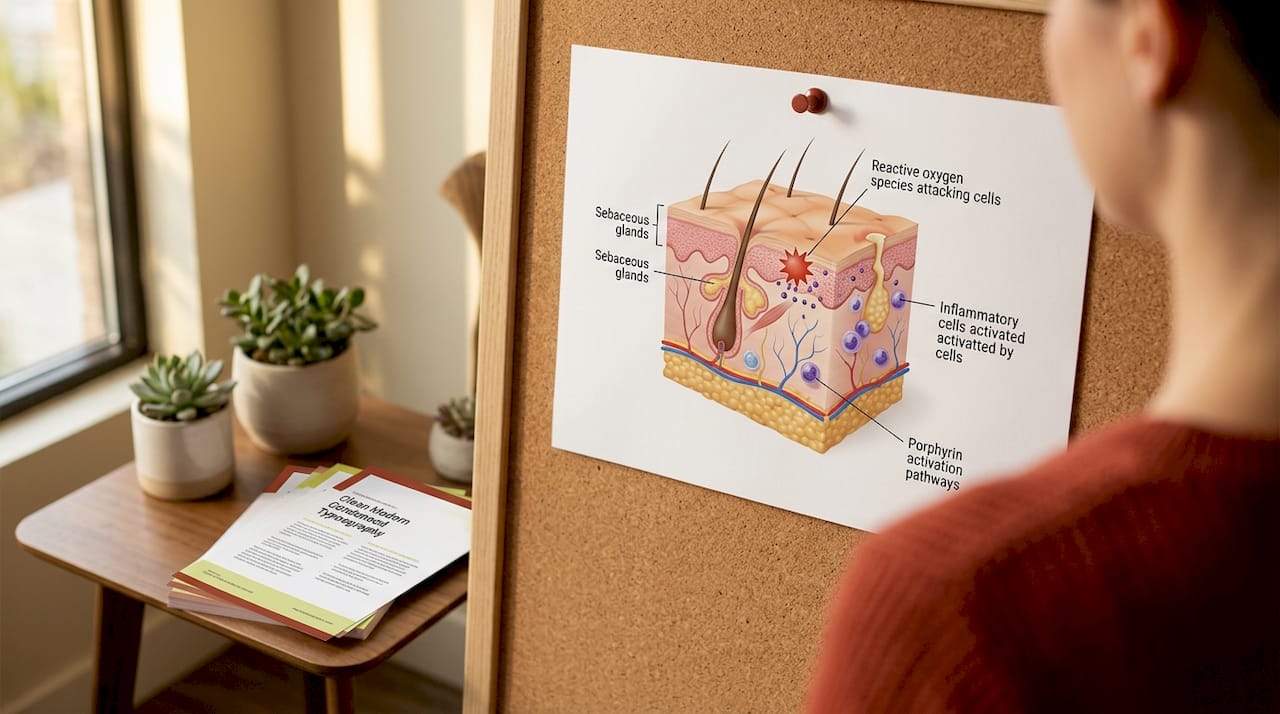
External environment is not a passive backdrop for your skin. Pollutants and UV radiation are active biochemical aggressors that amplify the oxidative stress acne connection in measurable ways.
Air pollutants, particularly particulate matter (PM2.5) and nitrogen dioxide (NO2), penetrate the outer skin barrier and generate ROS directly within skin tissue. The effects of oxidative stress on skin are compounded when pollution and UV radiation act together, since their combined ROS output exceeds what either produces alone. This synergy depletes key antioxidants, including vitamin E and squalene, faster than the skin can replenish them.
Clinical evidence from urban centers confirms this pattern. Pollution increases acne lesion counts and inflammatory markers by reducing antioxidant reserves and promoting sebum oxidation in acne-prone skin. This means people living in high-pollution cities face a structurally higher oxidative burden on their skin every single day, regardless of their skincare routine.
The specific pathways involved include:
- Lipid peroxidation of sebum: PM2.5 particles oxidize sebum components on the skin surface, producing the same comedogenic peroxides that C. acnes porphyrins generate internally.
- Follicular hyperkeratinization: Pollutant-driven ROS cause excess keratin production inside pores, narrowing the follicular canal and setting the stage for blockages.
- Antioxidant depletion: Repeated pollution exposure strips the skin of vitamin E, a fat-soluble antioxidant that normally protects sebum from oxidation. Once depleted, sebum becomes far more vulnerable to ROS attack.
- Immune threshold lowering: Pollutant signaling via AhR and TLR receptors primes sebaceous glands and immune cells to react more aggressively to smaller stimuli. Even minor bacterial signals can trigger a full inflammatory response once this threshold is lowered.
Pro Tip: Double-cleansing at night, first with an oil-based cleanser, then a gentle water-based one, physically removes PM2.5 particles and oxidized sebum before they can drive overnight inflammation.
What immunological responses does oxidative stress activate in skin?
Oxidative stress does not just damage skin cells. It actively reprograms how your immune system responds to everything happening in your skin. This is why the oxidative stress inflammation connection matters so much for anyone dealing with persistent breakouts.
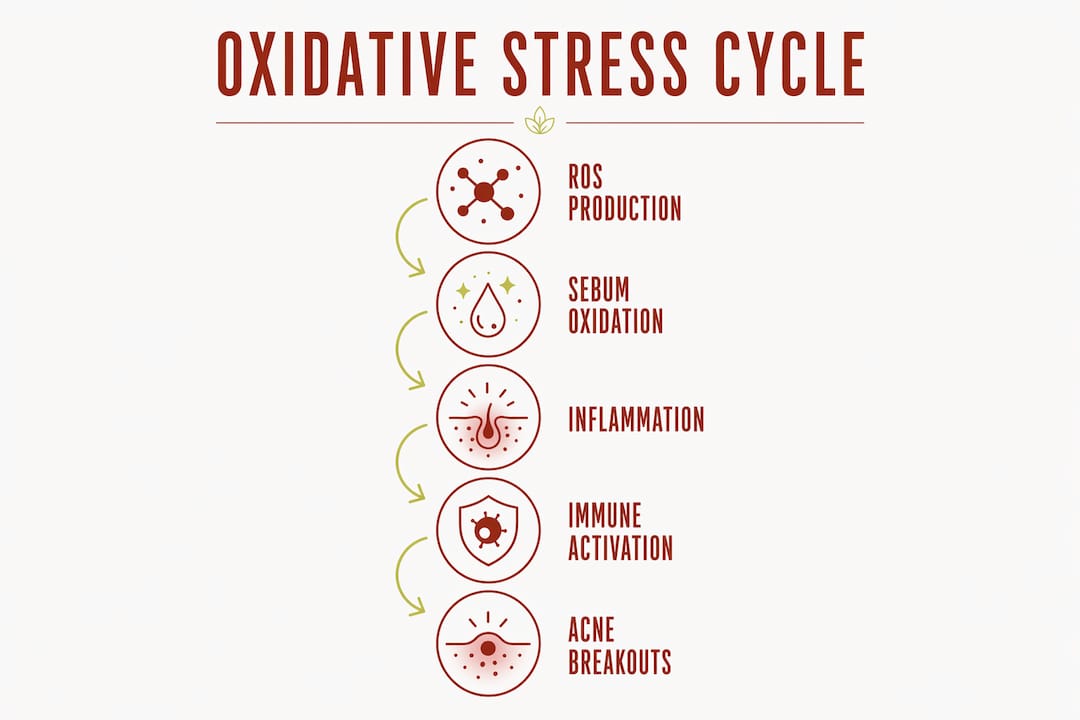
The immune activation sequence works through several parallel channels. First, ROS directly stimulate keratinocytes and sebocytes to produce IL-8, IL-1β, and IL-6. These cytokines do not just cause local redness. They recruit neutrophils and macrophages to the follicle, turning a microcomedone into a full inflammatory papule or pustule.
Second, the NLRP3 inflammasome pathway creates a feedback loop. Once activated by oxidative stress, NLRP3 keeps producing IL-1β even after the initial ROS trigger subsides. This explains why some acne lesions persist for weeks despite topical treatment. The inflammatory machinery is running independently of the original cause.
Third, the skin microbiome interacts with immune receptors in ways that oxidative stress amplifies. Aryl hydrocarbon receptor (AhR) and Toll-like receptor (TLR) signaling, both activated by pollutants and microbial metabolites, lower the threshold at which the immune system fires. The result is that even small stimuli can trigger repeated acne flares in oxidatively stressed skin. Recognizing the symptoms of oxidative stress inflammation early gives you a real advantage in interrupting this cycle before it escalates.
How do metabolic and lifestyle factors connect to oxidative stress and acne?
The factors triggering skin breakouts are not limited to what touches your face. What you eat, how you sleep, and how much psychological stress you carry all influence your systemic oxidative load, which in turn affects your skin.
| Factor | Mechanism | Effect on skin |
|---|---|---|
| High-glycemic diet | Spikes insulin and IGF-1 signaling, stimulating sebaceous gland activity | Increased sebum production, more substrate for oxidative damage |
| Psychological stress | Elevates cortisol and catecholamines, increasing ROS generation | Amplifies C. acnes virulence and heightens inflammatory signaling |
| Poor gut health | Disrupts immune-metabolic pathways via the gut-skin axis | Reduces systemic antioxidant capacity, worsens skin inflammation |
| Dietary antioxidants | Polyphenols like resveratrol and compounds like lactoferrin modulate ROS damage | Reduce cytokine production and support immune cell function |
Psychological stress deserves particular attention because it operates through two channels simultaneously. Cortisol directly increases ROS production in skin tissue, and it also modulates C. acnes behavior, making the bacterium more virulent and more capable of triggering immune responses. This is why stress-related breakouts often appear within 24 to 72 hours of a high-stress event, a timeline that matches the inflammatory cytokine cascade rather than a simple hormonal shift.
The gut-skin axis adds another layer. Gut microbiome imbalances reduce the body’s ability to produce and recycle antioxidants systemically. When your gut is producing fewer short-chain fatty acids and your intestinal barrier is compromised, systemic inflammation rises, and your skin’s oxidative burden increases as a downstream consequence. Addressing chronic systemic inflammation at the root level, rather than only treating surface symptoms, is the approach that produces lasting results.
Key takeaways
Oxidative stress triggers breakouts by generating ROS that oxidize sebum, activate inflammatory cytokines, and lower immune thresholds, making skin persistently reactive to even minor stimuli.
| Point | Details |
|---|---|
| ROS are the root trigger | Reactive oxygen species from C. acnes porphyrins and pollutants initiate the entire acne cascade. |
| Squalene oxidation forms blockages | ROS convert sebum squalene into comedogenic peroxides before a visible pimple appears. |
| NLRP3 sustains inflammation | Inflammasome activation creates a self-reinforcing cytokine loop that outlasts the original trigger. |
| Pollution compounds oxidative load | PM2.5 and NO2 deplete antioxidants and lower immune thresholds, worsening breakouts in urban environments. |
| Lifestyle shapes systemic ROS | Diet, stress, and gut health all influence the body’s total oxidative burden and skin reactivity. |
Why I think most acne advice misses the real upstream cause
Most acne conversations start and end with bacteria. Kill C. acnes, clear the skin. That logic is not wrong, but it is incomplete in a way that leaves a lot of people frustrated when antibiotics or benzoyl peroxide stop working.
What the research makes clear is that oxidative stress is upstream of the bacterial problem. C. acnes does not cause inflammation directly. It produces porphyrins that generate ROS, and those ROS cause inflammation. The bacterium is more like a catalyst than a direct aggressor. If you reduce the oxidative environment in the skin, you reduce the bacterium’s ability to trigger a cascade, even without eliminating it entirely.
The environmental angle is equally underappreciated. Dermatology clinics in Tokyo and Beijing have documented higher acne severity in patients from high-pollution districts compared to lower-pollution areas, controlling for other variables. That is not a coincidence. It is PM2.5 depleting vitamin E and lowering immune thresholds, exactly as the research describes.
The practical implication is that preventing breakouts from oxidative damage requires a systemic perspective, not just a topical one. Topical retinoids and salicylic acid address symptoms at the skin surface. Systemic antioxidant support, dietary changes, stress management, and gut health work on the oxidative load that feeds the problem in the first place. Both approaches have a role. But if you are only doing one, you are leaving half the solution on the table.
— Larry
Support your skin from the inside out with Tryrevivify
The research is clear: oxidative stress operates at the cellular level, well below what any topical product can reach. Tryrevivify was built specifically to address this. The patented formula combines superoxide dismutase (SOD), the body’s primary enzyme for neutralizing superoxide radicals, with prebiotic fiber that supports gut health and systemic antioxidant capacity. SOD acts as the first line of defense in your body’s antioxidant relay, neutralizing ROS before they can oxidize sebum or activate inflammatory pathways. If you are serious about addressing the root oxidative mechanisms behind your breakouts, explore the REVIVIFY® 30-day supply and see how cellular-level support fits into your skin health routine. Learn more at Tryrevivify.
FAQ
What is oxidative stress and how does it cause acne?
Oxidative stress is a cellular imbalance in which reactive oxygen species exceed the body’s antioxidant defenses. In skin, this imbalance oxidizes sebum lipids into comedogenic compounds and activates pro-inflammatory cytokines like IL-8 and IL-1β, directly producing acne lesions.
Can pollution trigger breakouts through oxidative stress?
Yes. Air pollutants like PM2.5 and NO2 generate ROS in skin tissue, deplete antioxidants including vitamin E, and lower immune activation thresholds via AhR and TLR signaling. Clinical data from urban centers confirm that pollution exposure increases acne lesion counts and inflammatory markers.
How does psychological stress cause skin breakouts?
Psychological stress elevates cortisol and increases systemic ROS production, which amplifies C. acnes virulence and heightens the skin’s inflammatory signaling. This explains why stress-related breakouts typically appear within 24 to 72 hours of a high-stress event.
What role does the NLRP3 inflammasome play in acne?
The NLRP3 inflammasome is activated by oxidative stress and microbial signals, producing IL-1β in a self-reinforcing loop. This sustained cytokine production keeps acne lesions inflamed long after the original ROS trigger has resolved, which is why some breakouts persist despite topical treatment.
Does diet affect oxidative stress and breakouts?
High-glycemic foods spike insulin and IGF-1 signaling, increasing sebum production and creating more substrate for oxidative damage. Dietary antioxidants like resveratrol and lactoferrin counter this by modulating ROS damage and reducing cytokine production at the cellular level.