

Supplement Routine for Digestive Disorders: A Symptom-First Guide
The most effective supplement routine for digestive disorders starts with matching the supplement to the symptom, not the other way around. A practical starting point: take a targeted digestive enzyme (lactase via Lactaid for dairy, or alpha-galactosidase via Beano for beans and vegetables) with your first bite when you know a trigger food is coming; add enteric-coated peppermint oil 30–60 minutes before meals if IBS cramping and bloating are your primary complaint; introduce a strain-specific probiotic for a defined 4–12 week course when post-antibiotic diarrhea or IBS is the driver; and consider magnesium glycinate (200–400 mg at night) if slow transit or constipation is part of your picture. Enteric-coated peppermint oil showed an overall success rate of 58% versus 29% for placebo in IBS trials, which is a meaningful clinical signal. Lactaid and Beano address food-specific maldigestion at the enzyme level. Magnesium glycinate supports smooth-muscle motility without the osmotic laxative effect of other magnesium forms.
Immediate next steps:
- At your next meal with a known trigger food, try one dose of the appropriate enzyme (Lactaid for dairy, Beano for legumes or cruciferous vegetables) with the first bite.
- If IBS cramping is your main symptom, start with one enteric-coated peppermint oil capsule daily and work up to three per day over two weeks.
- Choose a probiotic with a clinically studied strain for your specific condition rather than a generic multi-strain blend.
- If you notice GI bleeding, unexplained weight loss, progressive difficulty swallowing, or symptoms that worsen after two weeks on any supplement, see a clinician before continuing.
Pro Tip: Write down your top three symptoms and their timing before you buy anything. That list will tell you which supplement category to start with and makes your next clinician visit far more productive.
Table of Contents
- Which digestive patterns benefit from supplements, and when do you need a clinician?
- What do the core digestive supplements actually do?
- How do you build a safe, individualized daily routine?
- What does the evidence show, and what do sample routines look like?
- How does Revivify fit into a daily gut-support routine?
- Key Takeaways
- The case for slowing down before you stack
- Revivify supports your gut health at the cellular level
- Useful sources
Which digestive patterns benefit from supplements, and when do you need a clinician?
Not every digestive complaint responds to the same supplement strategy. The symptom pattern is the map.
Upper-GI symptoms (post-meal fullness, belching, fatty-food intolerance, nausea after rich meals) point toward digestive enzyme support and, in some cases, bile or stomach-acid assistance. If you feel heavy and uncomfortable within an hour of eating, the mechanism is usually inadequate enzyme output for the meal’s composition, not a microbiome problem.
Lower-GI patterns are more varied. Bloating and gas triggered by specific foods (beans, dairy, wheat) respond well to targeted OTC enzymes. IBS with cramping and altered bowel habits has the strongest evidence base for enteric-coated peppermint oil and, for some subtypes, strain-specific probiotics. Post-antibiotic diarrhea responds to Saccharomyces boulardii and select Lactobacillus strains. Slow transit constipation often improves with magnesium glycinate and adequate soluble fiber.
Lactaid (lactase) works specifically for lactose intolerance; Beano (alpha-galactosidase) targets gas from complex carbohydrates in beans and vegetables. Both are meal-specific tools, not daily maintenance supplements. Prescription pancreatic enzyme replacement is a separate category, reserved for diagnosed exocrine pancreatic insufficiency, and requires a clinician’s guidance. According to CDC surveillance data, digestive conditions are among the most common reasons Americans seek outpatient care, which means many people are managing real, diagnosable conditions with OTC supplements when they actually need evaluation first.
Red flags that require medical evaluation before starting any supplement routine: sudden or severe abdominal pain, blood in stool or black tarry stools, unexplained weight loss of more than a few pounds over weeks, progressive difficulty swallowing, fever with GI symptoms, or any symptom that has been severe for more than two weeks without improvement. These are not supplement problems. See a clinician.
When symptoms persist despite dietary changes, a clinical assessment is the right next step, not a larger supplement stack.
What do the core digestive supplements actually do?
Probiotics: strain specificity matters more than CFU count
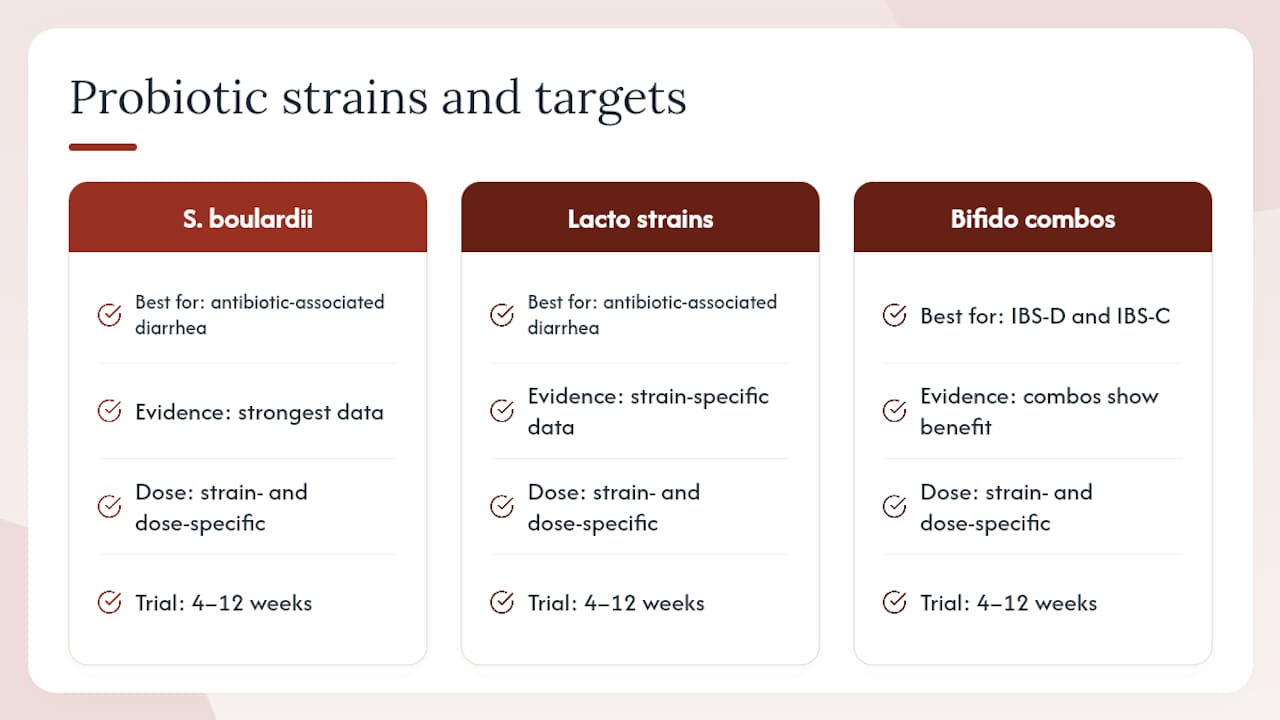
The evidence for probiotics is condition-specific, not universal. Saccharomyces boulardii and certain Lactobacillus strains have the strongest data for antibiotic-associated diarrhea. Some Bifidobacterium and Lactobacillus combinations show benefit for IBS-D (diarrhea-predominant) and IBS-C (constipation-predominant) subtypes. Systematic reviews consistently emphasize that results are strain- and dose-specific: a product with a studied strain at a verified CFU count at end of shelf-life is worth far more than a 20-strain blend with no clinical backing. Plan for a 4–12 week trial before judging effectiveness. Look for third-party verification and a clear strain ID (genus, species, and strain designation) on the label.
Digestive enzymes: right enzyme, right meal, right moment
Targeted enzyme use is the key principle here. Lactase (Lactaid) replaces the enzyme your small intestine under-produces when you consume dairy. Alpha-galactosidase (Beano) breaks down the oligosaccharides in beans, lentils, and cruciferous vegetables before gut bacteria ferment them into gas. Both are taken immediately before or with the first bite of the triggering meal. Taking them an hour later does nothing useful. Prescription pancreatic enzyme replacement therapy (PERT) is a different category entirely, used when the pancreas cannot produce adequate enzymes due to chronic pancreatitis, cystic fibrosis, or pancreatic surgery.

Peppermint oil: enteric-coated only, with a clear trial plan
Plain peppermint oil capsules dissolve in the stomach and can worsen reflux. Enteric-coated formulations pass through to the small intestine, where they relax smooth muscle and reduce visceral hypersensitivity. In IBS trials, enteric-coated peppermint oil produced an overall success rate of 58% versus 29% for placebo. Start with one capsule daily for the first week, then increase to up to three capsules per day, taken 30–60 minutes before meals or about two hours after eating. A 2–4 week trial is enough to know whether it is working for you.
Fiber and prebiotics: type and pace of introduction both matter
Psyllium husk and partially hydrolyzed guar gum (PHGG) are generally better tolerated for IBS than highly fermentable fibers like inulin or fructooligosaccharides (FOS). Dietary fiber guidance consistently recommends increasing fiber intake gradually alongside adequate hydration. If you suspect small intestinal bacterial overgrowth (SIBO) or notice that fiber reliably worsens your bloating, hold off on prebiotic supplementation and discuss with a clinician before adding fermentable fibers. For feeding beneficial gut bacteria, starting with gentler fibers and building tolerance over weeks is the practical approach.
Magnesium glycinate: motility support without the laxative effect
Magnesium glycinate relaxes smooth muscle in the GI tract, which supports motility in slow-transit constipation without the strong osmotic laxative effect of magnesium citrate or oxide. The typical dosing window is 200–400 mg at night, taken with food. It is generally well tolerated, but people with kidney disease should check with a clinician before using any magnesium supplement.
Herbals: ginger and curcumin as targeted adjuncts
Ginger (250–500 mg standardized extract) has reasonable evidence for nausea and upper-GI discomfort. Curcumin, particularly in phospholipid-complexed or nano-emulsified forms for better bioavailability, shows promise for low-grade intestinal inflammation and gut barrier support, though effect sizes vary across studies. Both are adjuncts, not primary treatments. Herbal remedies like ginger, peppermint, and chamomile are appropriate for mild, occasional symptoms; persistent or severe symptoms warrant clinical evaluation rather than escalating herbal doses.
Quality cues to check on any supplement label: a named strain (for probiotics), CFU count guaranteed at end of shelf-life (not at manufacture), enzyme activity units (not just milligrams), and a third-party testing seal such as USP, NSF International, or ConsumerLab.
| Supplement | Primary Use | Typical Dose | Trial Length |
|---|---|---|---|
| Lactase (Lactaid) | Lactose intolerance | Per product label, with first bite | Per meal, as needed |
| Alpha-galactosidase (Beano) | Gas from beans/vegetables | Per product label, with first bite | Per meal, as needed |
| Enteric-coated peppermint oil | IBS cramping and bloating | 1 capsule/day, up to 3/day | 2–4 weeks |
| Strain-specific probiotic | Post-antibiotic diarrhea, IBS | Per studied strain dose | 4–12 weeks |
| Magnesium glycinate | Slow transit, constipation | 200–400 mg at night | 2–4 weeks |
| Psyllium/PHGG fiber | Stool consistency, IBS | Start low, increase gradually | 4–8 weeks |
| Curcumin (bioavailable form) | Low-grade gut inflammation | 200–400 mg | 4–8 weeks |
How do you build a safe, individualized daily routine?
A symptom-first sequence works better than starting a full supplement stack at once. Think of it in four steps.
- Address meal-time maldigestion first. If specific foods reliably cause symptoms within an hour of eating, start with the targeted enzyme for that food. This is the fastest feedback loop: you know within one meal whether it helps.
- Treat the dominant acute symptom driver. For IBS cramping and bloating between meals, add enteric-coated peppermint oil on the dosing schedule above. For nausea, try ginger extract with meals.
- Reinoculate or support the microbiome where there is a clear indication. Post-antibiotic diarrhea and some IBS subtypes have the clearest evidence for probiotics. Choose a strain matched to your situation, not the most popular product on the shelf.
- Support barrier and motility as a maintenance layer. Magnesium glycinate for slow transit, a gentle soluble fiber for stool consistency, and curcumin or polyphenols for low-grade inflammation fit here, once the acute drivers are addressed.
Timing rules that actually matter:
- Enzymes: with the first bite, every time, no exceptions.
- Enteric-coated peppermint oil: 30–60 minutes before meals or two hours after eating.
- Probiotics: daily, morning or as the product label advises; consistency matters more than the exact hour.
- Magnesium glycinate: at night with food to minimize any GI discomfort.
- Fiber supplements: with a full glass of water, away from medications by at least two hours.
Stacking rules: introduce one new supplement at a time, with at least one week between additions. Set a clear trial window (2–4 weeks for peppermint oil, 4–8 weeks for probiotics and fiber) and track one to three measurable symptoms (stool frequency, bloating severity on a 1–10 scale, pain episodes per week). Without a monitoring checklist, you cannot tell what is working. For a broader view of how daily supplement stacking fits into systemic health goals, the sequencing principle applies across categories.
What does the evidence show, and what do sample routines look like?
Evidence snapshot
The peppermint oil data is the strongest single-supplement finding in functional GI disorders: 58% overall success versus 29% for placebo in IBS trials using enteric-coated formulations. Enzyme evidence for lactose intolerance (lactase) and complex-carbohydrate maldigestion (alpha-galactosidase) is well-established and mechanistically straightforward. Probiotic evidence, per systematic reviews, is most consistent for antibiotic-associated diarrhea and selected IBS subtypes, with strain specificity being the deciding factor. Curcumin and polyphenols show adjunctive benefit for gut barrier integrity and low-grade inflammation, though effect sizes are more variable.
Three practical 7-day sample routines
-
Post-meal bloating from specific foods (enzyme-first routine)
- Morning: no supplements needed unless fiber is part of the plan (psyllium with breakfast and a full glass of water).
- With each trigger meal: Lactaid (for dairy) or Beano (for legumes/vegetables) with the first bite.
- Night: magnesium glycinate 200–400 mg if slow transit is also present.
- Monitor: bloating severity and gas episodes per day. Expect clear feedback within 3–5 meals.
- Rationale: Replacing the deficient enzyme at the point of digestion addresses the root mechanism of food-triggered gas and bloating.
-
IBS-predominant bloating and cramping (peppermint-first routine)
- Morning: enteric-coated peppermint oil, 1 capsule, 30–60 minutes before breakfast.
- Before lunch and dinner: same peppermint capsule timing, increasing to 2–3 capsules/day by week two if tolerated.
- Gradually introduce psyllium (start with ½ teaspoon in water daily) by day 4–5 if constipation is part of the pattern.
- Night: magnesium glycinate 200 mg if needed for motility.
- Monitor: cramping frequency, bloating score, stool consistency. Trial window: 2–4 weeks.
- Rationale: Enteric-coated peppermint oil targets smooth-muscle spasm and visceral hypersensitivity, the two dominant mechanisms in IBS cramping.
-
Post-antibiotic reinoculation routine
- Start the day after finishing antibiotics (or as directed by your clinician): Saccharomyces boulardii or a Lactobacillus rhamnosus GG product at the studied dose, daily.
- Continue for 4–8 weeks. Take the probiotic at least two hours away from any remaining antibiotic doses if courses overlap.
- After week 2: introduce a gentle prebiotic fiber (psyllium or PHGG, not inulin) to support microbiome recovery.
- Monitor: stool consistency, frequency, and any recurrence of diarrhea. See a clinician if diarrhea is severe or bloody.
- Rationale: Strain-specific probiotics reduce the duration and severity of antibiotic-associated diarrhea; prebiotic fiber added later provides substrate for the recovering microbiome without overwhelming a disrupted gut.
How does Revivify fit into a daily gut-support routine?
Revivify is not a meal-time enzyme replacement, and it is not designed to substitute for a strain-specific probiotic course after antibiotics. Where it fits is the maintenance and repair phase: once you have addressed the acute symptom drivers, a daily product that supports the gut ecosystem, reduces oxidative stress, and reinforces barrier integrity becomes genuinely useful.
At Tryrevivify, we built Revivify as a daily gel combining four components that work at the cellular level:
- Prebiotic fiber: feeds beneficial bacteria and supports microbiome diversity, which is the foundation of long-term digestive resilience. For a deeper look at gut lining health best practices, prebiotic fiber is a consistent element.
Revivify is third-party tested, plant-based, and available with subscription options for consistent daily use. If you are pregnant, immunocompromised, or taking medications that interact with any of the above components, check with your clinician before starting.
For readers who want to understand the antioxidant mechanisms in more depth, the antioxidant enzyme immune support overview explains how SOD and related compounds work at the cellular level.
Key Takeaways
A targeted, symptom-first supplement routine for digestive disorders outperforms random stacking: match the supplement to the mechanism, set a clear trial window, and escalate to a clinician when red flags appear.
| Point | Details |
|---|---|
| Match supplement to symptom | Enzymes for food-triggered maldigestion, peppermint oil for IBS cramping, probiotics for post-antibiotic or defined IBS patterns. |
| Use clear trial windows | Peppermint oil: 2–4 weeks; probiotics: 4–12 weeks; enzymes give feedback within 3–5 meals. |
| Introduce one change at a time | Adding multiple fermentable prebiotics or probiotics at once makes it impossible to identify what is helping or causing side effects. |
| Know the red flags | GI bleeding, unexplained weight loss, progressive dysphagia, or severe symptoms lasting more than two weeks require clinical evaluation, not more supplements. |
| Revivify for daily maintenance | Tryrevivify’s Revivify gel combines SOD, prebiotic fiber, polyphenols, and lactobacillus for cellular-level gut support in the maintenance and repair phase. |
The case for slowing down before you stack
The most common mistake I see in gut health self-management is not choosing the wrong supplement. It is starting five things at once and then having no idea what worked or what caused the new symptom. The supplement industry has made it easy to buy a “complete gut support stack” in one click, but that approach makes you a passive consumer of products, rather than an active observer of your own physiology.
The symptom-first framework in this article is not just a structure for choosing supplements. It is a discipline for paying attention. When you start with one targeted change, track three measurable symptoms, and give it a defined trial window, you learn something real about your gut. That knowledge compounds. After a few well-run trials, you know whether your problem is enzyme-level, microbiome-level, or motility-level, and you stop spending money on things that do not apply to you.
Diet, sleep, and stress management are not soft lifestyle advice to tack onto a supplement routine. They are the substrate the supplements work on. Chronic sleep deprivation measurably alters gut motility and microbiome composition. Sustained psychological stress activates the gut-brain axis in ways that no probiotic fully compensates for. Supplements work best when the fundamentals are in place, and they work least when they are substituting for them.
When I refer someone to professional care, it is not because supplements have failed. It is because some conditions (SIBO, IBD, pancreatic insufficiency, celiac disease) require diagnosis before any supplement routine makes sense. Getting that diagnosis first is not a detour. It is the most efficient path to actually feeling better.
Revivify supports your gut health at the cellular level
If you have worked through the symptom-first steps in this article and you are looking for a single daily product to support the maintenance and repair phase, Revivify is built for exactly that role. Its patented gel formula delivers superoxide dismutase, prebiotic fiber, polyphenols, and lactobacillus in one daily dose, addressing oxidative stress, microbiome support, and gut barrier integrity simultaneously.
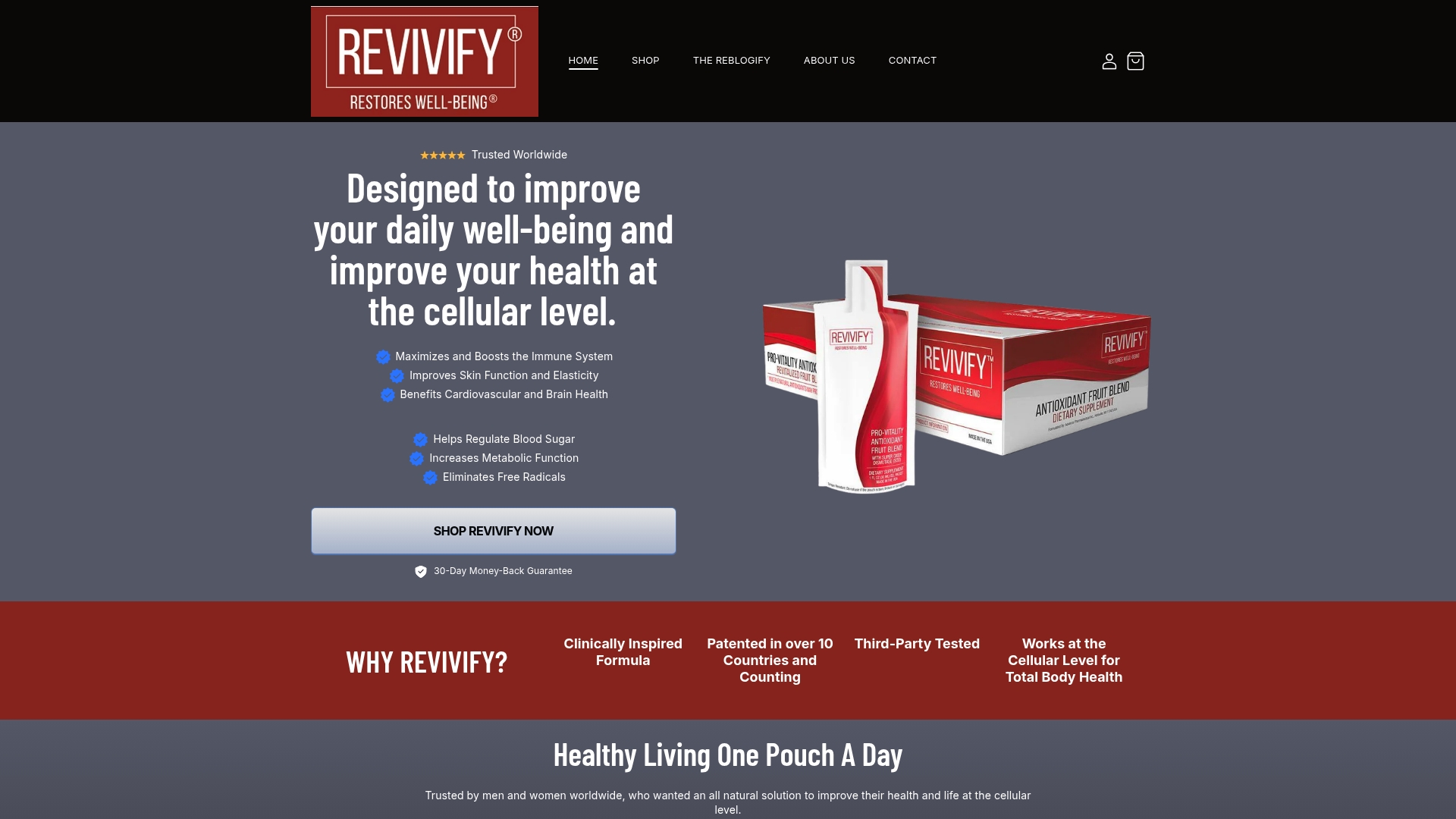
Revivify is third-party tested and plant-based, with subscription options that make consistent daily use straightforward. It is not a replacement for meal-time enzymes or a short probiotic course after antibiotics. It is the daily foundation that supports your gut at the cellular level once the acute work is done. If you are pregnant, immunocompromised, or on prescription medications, confirm with your clinician before starting. Try Revivify and give your gut the daily cellular support it needs to stay resilient.
This article is for general informational purposes only and is not a substitute for professional medical advice. Confirm current supplement guidance and any interactions with a qualified clinician or registered dietitian.
Useful sources
The following primary sources and clinical overviews support the evidence statements in this article.
Peppermint oil and IBS trials
- PMCID: PMC5053451 — Peppermint oil trials in IBS: The primary source for enteric-coated peppermint oil dosing, formulation guidance, and the 58% vs. 29% placebo success rate in IBS trials.
Digestive enzyme guidance
- PMCID: PMC3401057 — Digestive enzymes and indications: Covers targeted enzyme use, timing with meals, and the evidence base for lactase and alpha-galactosidase.
- Harvard Health: Digestive enzymes: Practical clinical overview of OTC enzymes including Lactaid and Beano, and when prescription pancreatic enzymes are required.
Magnesium forms and motility
- PMCID: PMC5652077 — Magnesium bioavailability and clinical effects: Explains why magnesium glycinate is preferred for motility support and how it differs from citrate and oxide forms.
Probiotics and microbiome
- PMCID: PMC9227236 — Probiotics and microbiome reviews: Systematic review evidence for strain-specific probiotic use in antibiotic-associated diarrhea and IBS subtypes.
Polyphenols, curcumin, and gut inflammation
- PMCID: PMC7551052 — Polyphenols, curcumin, and gut inflammation: Reviews adjunctive evidence for curcumin and polyphenols in gut barrier support and low-grade intestinal inflammation.
Fiber and dietary guidance
- NHS: Good foods to help your digestion: Public health guidance on fiber types, hydration, and gradual introduction strategies for IBS-sensitive individuals.
Herbal remedies
- Healthline: Home remedies for indigestion: Overview of herbal options (ginger, peppermint, chamomile) for mild symptoms, with appropriate cautions for persistent issues.
Population context and escalation guidance
- CDC NCHS Data Brief No. 399: Population-level data on digestive condition prevalence and context for when clinical evaluation is warranted.