

NSF Certified Supplements: Your Complete Verification Guide
NSF certified supplements have passed independent, third-party testing that confirms what’s on the label is actually in the bottle, and that the product is free from harmful contaminants. That’s the short answer. The longer one matters just as much: NSF certification is an ongoing surveillance program, not a one-time stamp. Products are periodically retested and facilities audited annually, which means the standard holds across production runs, not just the batch that first earned the mark.
To verify any product right now, start with the NSF Certified Products Search at info.nsf.org/certified/dietary/. Athletes and drug-tested workers should also check the NSF Certified for Sport directory at nsfsport.com/certified-products. Both directories are free, searchable by product name or manufacturer, and show the exact certification type for each listing.
Quick trust signals to look for on a supplement label:
- NSF/ANSI 173 or “NSF Contents Certified” mark (product-level certification)
- NSF Certified for Sport® seal (adds banned-substance screening)
- Reference to GMP/NSF/ANSI 455 (facility-level manufacturing quality)
Key Takeaways
NSF certification confirms label accuracy, screens for contaminants, and requires annual audits, making it one of the most rigorous independent quality standards available for dietary supplements in the United States.
| Point | Details |
|---|---|
| Where to verify | Use info.nsf.org/certified/dietary/ or nsfsport.com/certified-products to confirm any product’s certification status. |
| Which cert to choose | NSF/ANSI 173 suits everyday shoppers; NSF Certified for Sport® is the right choice for athletes and drug-tested workers. |
| Key on-pack signals | Look for the specific NSF mark, a certification number, and GMP/NSF/ANSI 455 reference for the facility. |
| Limits of certification | Certified products meet NSF’s allowable limits, which may differ from stricter standards like California Prop 65. |
| Tryrevivify | Revivify is a third-party tested, plant-based daily supplement available at tryrevivify.com for consumers prioritizing cellular health and ingredient transparency. |
Table of Contents
- What NSF actually tests when it certifies a supplement
- The three NSF certification types that apply to supplements
- How to find and verify NSF-certified supplements step by step
- Which certification level do you actually need?
- What NSF certification does not guarantee
- Practical criteria for choosing an NSF-certified supplement you can trust
- Why NSF’s independence and ongoing surveillance matter
- Revivify is a transparently tested daily supplement worth knowing about
- An editor’s perspective on buying certified supplements
- Sources
What NSF actually tests when it certifies a supplement
NSF/ANSI 173 is the only American National Standard specifically for testing and certifying dietary supplements, and it covers four distinct layers of review before a product earns the mark.
Label-claim verification is the foundation. NSF tests the finished product to confirm that every declared ingredient and its stated amount matches the supplement facts panel. If a label says an amount of vitamin C per serving, the product must contain that amount within defined tolerances.
Toxicology and contaminant screening goes further. Products are evaluated for heavy metals, undeclared ingredients, adulterants, and other impurities that could pose a safety risk. This is where NSF’s independence becomes meaningful: the organization conducts testing in its own accredited laboratories rather than relying solely on data the manufacturer supplies. That direct testing reduces the chance of incomplete or self-serving results.

Manufacturing systems are evaluated through GMP audits aligned with NSF/ANSI 455. A facility must meet these manufacturing quality standards as a prerequisite for product certification, so the environment where a supplement is made is part of the picture, not an afterthought.
Ongoing surveillance is what separates NSF certification from a one-time seal. Annual facility audits and periodic retesting of certified products mean the standard applies across production runs, not just the batch that first passed.
Pro Tip: When you see an NSF mark on a label, check the NSF directory to confirm the specific product SKU is listed, not just the brand. Certification applies to individual products, not entire product lines.
NSF also evaluates ingredients separately from finished products, covering vitamins, minerals, herbs, botanicals, amino acids, sports supplements, and extracts to verify that a raw ingredient’s certificate of analysis accurately reflects its identity and purity. That ingredient-level review matters when you’re buying a product whose formula relies on a certified raw material rather than a certified finished product.
The three NSF certification types that apply to supplements
NSF offers three distinct programs relevant to dietary supplements, and they stack on each other rather than compete. Understanding which mark you’re looking at tells you exactly what was tested and to what standard.
- NSF/ANSI 173 (product certification): Verifies label accuracy, ingredient identity and amounts, and contaminant limits for the finished product. Often displayed as “NSF Contents Certified.” This is the baseline product-level mark most health-conscious shoppers should look for.
- NSF/ANSI 455 (GMP / facility certification): Confirms that a manufacturer’s quality systems, processes, and facility meet Good Manufacturing Practice standards. Annual audits are required. This is a prerequisite for product certification, so any NSF/ANSI 173-certified product already comes from a GMP-audited facility.
- NSF Certified for Sport® (NSF 306): Builds on product certification by adding targeted screening for a broad spectrum of banned substances, including steroids, SARMs, stimulants, beta-agonists, and diuretics. Designed for athletes and anyone subject to drug testing. This is the most rigorous consumer-facing mark NSF offers for supplements.
The programs are complementary, not interchangeable. GMP certification (455) addresses manufacturing risk. Product certification (173) addresses label accuracy and contaminant risk. Certified for Sport® addresses doping risk on top of both. Each reduces a different category of harm.
| Program | Standard | Scope | Primary Audience |
|---|---|---|---|
| GMP Certification | NSF/ANSI 455 | Facility quality systems, annual audits | Manufacturers, B2B buyers |
| Product Certification | NSF/ANSI 173 | Label accuracy, contaminants, ingredient identity | General consumers |
| Certified for Sport® | NSF 306 | All of 173 plus a broad spectrum of banned substances | Athletes, drug-tested workers |
How to find and verify NSF-certified supplements step by step
Knowing a certification exists is one thing. Confirming that the specific bottle in your cart carries it is another. Here’s the practical sequence.
1. Search the NSF Certified Products directory. Go to info.nsf.org/certified/dietary/ and enter at least three letters of the product name or manufacturer. The directory returns matching listings with certification type and product details. For Certified for Sport® products, use the parallel directory at nsfsport.com/certified-products.
2. Confirm the exact SKU and certification scope. Once you find a listing, check whether it covers the finished product or just an ingredient. Note the certification type (Contents Certified vs. Certified for Sport®) and the certification date. A brand may have one certified SKU and several uncertified ones in the same product line.
3. Cross-check the on-pack mark. The mark printed on the label should match the certification type shown in the NSF listing. If the listing shows “NSF Contents Certified” but the label displays a Certified for Sport® seal, something is off and warrants a call to the manufacturer.
4. Request a certificate of analysis when it matters. For high-stakes purchases, ask the seller for the COA or lot-testing documentation and compare the batch identifier to what’s on your bottle. This is especially relevant for therapeutic-use supplements where label-claim accuracy directly affects outcomes.
5. Athletes: verify lot-level screening. Cross-check the product in the NSF Certified for Sport directory and ask the manufacturer whether batch-level or lot-level testing is performed before release. Certification at the product level doesn’t automatically mean every production lot was individually screened.
Pro Tip: Take a screenshot of the NSF directory listing with the date visible. If you’re buying through a third-party seller or online marketplace, that screenshot is your concise proof that the product was certified at the time of purchase.
Which certification level do you actually need?
The right level of assurance depends on why you’re taking the supplement and what risks matter most to you.
- Everyday health-conscious shoppers: NSF/ANSI 173 provides strong assurance of label accuracy and contaminant screening. For most people taking vitamins, minerals, or botanical supplements, this is the appropriate standard to look for.
- Competitive athletes and drug-tested workers: NSF Certified for Sport® is the practical choice. It screens for hundreds of banned substances across all major doping classes and is recognized by many U.S. sports organizations. USADA and similar anti-doping bodies consistently point athletes toward certified products precisely because the supplement industry carries inherent contamination risk.
- People focused on minimizing heavy metals: Certification helps, but check the specific allowable limits. NSF sets permissible contaminant thresholds that may differ from stricter jurisdictional standards. If you’re in California or following Prop 65 guidelines, look for published COA data alongside the NSF mark.
- Those buying for children or medically sensitive populations: Certification reduces risk but doesn’t eliminate it. Pair the NSF mark with a review of the COA and, when appropriate, a conversation with a healthcare provider.
Pro Tip: If you’re an athlete who competes under WADA or USADA rules, “third-party tested” on a label is not enough. Only NSF Certified for Sport® or an equivalent program with banned-substance screening gives you meaningful protection.
What NSF certification does not guarantee
Certification is a meaningful signal, but it has real limits. Misreading what it covers is one of the more common mistakes informed shoppers make.
- It does not mean zero contaminants. Certified products meet NSF’s allowable limits, which are set to be safe but are not always the strictest possible benchmark. As reported comparisons show, NSF Certified for Sport’s lead limit is ≤10 µg/day, while California Proposition 65 sets its threshold at 0.5 µg/day. Both are considered protective, but they are not the same number.
- It does not cover every product from a brand. Certification applies to specific SKUs and, in some cases, specific lots. A brand with one certified product may sell ten uncertified ones under the same label design.
- The marks are not interchangeable. An “NSF Contents Certified” mark is not the same as an “NSF Certified for Sport®” seal. Reading the fine print on the label matters.
- A certificate doesn’t replace lot-level data for critical use cases. If you need the strictest possible proof of what’s in a specific production run, ask for lot-level COA documentation. The NSF listing confirms the product type is certified; the COA confirms the batch.
Certification reduces risk. It does not eliminate it. The most transparent brands publish batch-level testing data alongside their NSF marks, giving you two independent data points instead of one. When a brand makes that documentation easy to find, that’s a meaningful signal of confidence in their own product.
Practical criteria for choosing an NSF-certified supplement you can trust
Once you’ve confirmed a product is certified, a short checklist helps you evaluate whether it’s the right choice for your situation. Consumer Reports advises looking for third-party seals, COAs, and active transparency from brands, and that guidance holds up in practice.
- Matching SKU and serving size: Confirm the product in the NSF directory matches the exact format and serving size you’re buying. A 60-count bottle and a 120-count bottle of the same formula may have different listing entries.
- Certification type on-pack: The label should clearly state which NSF mark applies. Vague language like “tested by NSF” without a specific program name is a yellow flag.
- Visible certification number or link: Some products print a certification ID or direct you to the NSF listing. That’s the easiest verification path.
- Available COA or lot testing: Manufacturers that publish batch testing or full COAs are easier to verify and signal confidence in their own quality. This is especially relevant for anti-inflammatory and botanical supplements where ingredient identity is harder to confirm visually.
- GMP/NSF/ANSI 455 for the facility: If the product carries NSF/ANSI 173, the facility is already GMP-audited. If you’re evaluating a product with a different third-party mark, ask whether the facility has been independently audited.
Questions worth asking any seller before you buy:
- Which lot was tested, and can you provide the COA?
- Is this product listed in the NSF certified-products directory?
- For athletes: is lot-level screening performed before each production run is released?
Pro Tip: Manufacturers that publish their COAs publicly, without requiring a request, are signaling something important: they’re confident in what the data shows. That transparency is worth more than a certification mark alone.
Why NSF’s independence and ongoing surveillance matter
The supplement industry in the United States operates under a regulatory framework where manufacturers are largely responsible for ensuring their own products are safe before they reach market. That structure makes independent third-party testing not just useful but structurally necessary for consumers who want reliable assurance.
NSF’s approach addresses this directly. The organization conducts testing in accredited labs and performs annual facility audits and periodic retesting of certified products. That ongoing surveillance model means a product that passes once doesn’t coast indefinitely on a single result. Manufacturing conditions change, ingredient suppliers change, and periodic retesting catches drift that a one-time audit would miss.
- Lab independence: NSF tests products directly rather than simply reviewing manufacturer-submitted data. That distinction matters because manufacturer-supplied testing has an inherent conflict of interest.
- Annual audits: Facility audits happen on a recurring schedule, not just at initial certification. A facility that slips on GMP standards risks losing certification for every product it makes.
- Periodic retesting: Certified products are retested over time, adding a layer of ongoing quality assurance that single-certification programs don’t provide.
The ongoing surveillance model is what separates a meaningful certification from a marketing badge. Any brand can commission a single test and display the result. Fewer brands maintain the standard across every production run, year after year, under independent oversight.
For athletes, the Certified for Sport® program adds a layer specifically designed for doping risk, screening broadly across steroid, SARM, stimulant, beta-agonist, and diuretic classes. That breadth is why sports organizations and anti-doping bodies treat it as a meaningful risk-reduction tool rather than just a quality signal.
Revivify is a transparently tested daily supplement worth knowing about
If you’re building a daily supplement routine and want a product that prioritizes transparency, Revivify is worth a close look. Revivify is a plant-based daily supplement in gel form that combines superoxide dismutase, prebiotic fiber, polyphenols, and lactobacillus to support cellular health, reduce oxidative stress, and promote digestive and immune function. It’s third-party tested, comes with a risk-free guarantee, and is available with subscription options that make consistent daily use practical.
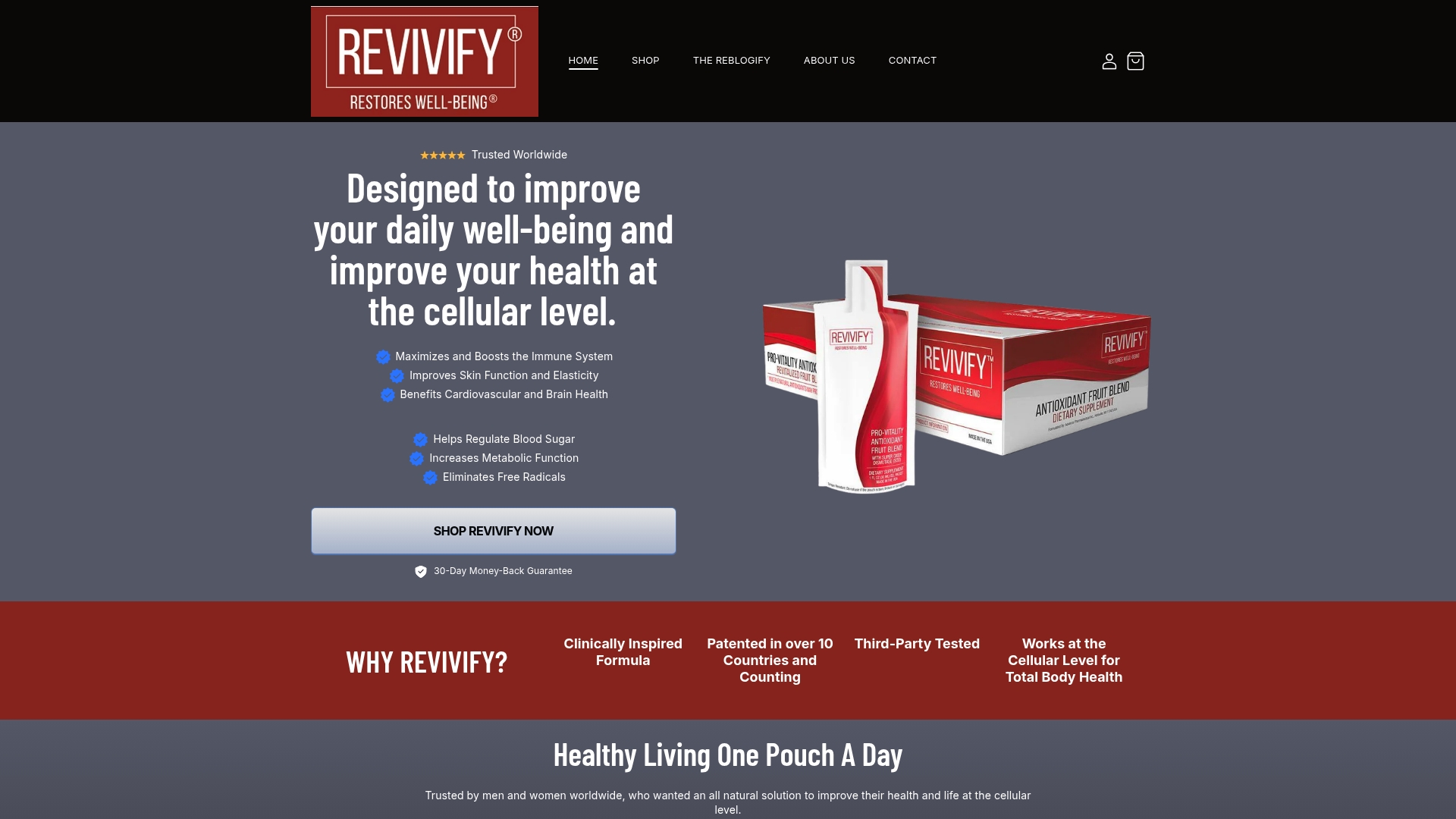
Revivify’s testing and product claims differ from NSF product certification. For NSF-certified SKUs specifically, use the NSF Certified Products Search and NSF Sport directories described throughout this guide. Revivify is positioned as a transparently tested option for consumers who prioritize cellular-level antioxidant support and ingredient integrity. You can review the full formula, testing details, and ordering options at Tryrevivify and decide whether it fits your daily health goals.
An editor’s perspective on buying certified supplements
The most useful habit I can recommend is this: before you buy any supplement, spend 90 seconds in the NSF directory. Enter the product name, find the listing, and screenshot it with the date. That screenshot is your record. If the product isn’t listed, that absence tells you something too.
Beyond verification, I’d push back on one assumption many shoppers carry: that a certification mark on the front of a bottle is the end of the due diligence process. It’s the beginning. Certification confirms the product meets NSF’s standards at the time of testing. It doesn’t tell you whether the specific lot in your hand was individually screened, whether the brand publishes its COA data openly, or whether the allowable contaminant limits align with your personal thresholds. For most people, NSF/ANSI 173 is more than sufficient. For athletes, Certified for Sport® is the only mark that meaningfully addresses doping risk. For anyone with specific health concerns, pairing the NSF mark with a published COA is the most complete picture you can get without running your own lab test.
Certification reduces risk. Transparent brands reduce it further. The two together are the closest thing to genuine assurance the supplement market currently offers.
This article is general information, not a substitute for advice from a qualified doctor. Consult a qualified healthcare professional about your own circumstances before acting on anything here.
Sources
These are the primary resources for verifying NSF-certified supplements and understanding the standards behind them.
- Dietary Supplement and Vitamin Certification | NSF
- Search for NSF Certified Dietary Supplements
- Protein certifications explained – SupplementMath